Updated 24 July 2026 · By Old Bangers Editorial
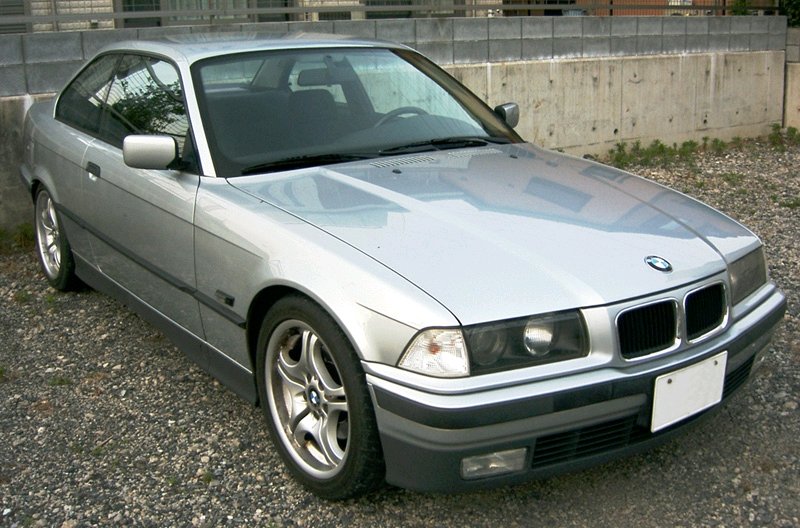
Short answer: The E36 (1990–2000) and E46 (1998–2006) are the two 3-Series generations most enthusiasts cross-shop. The E36 is lighter, simpler and rawer; the E46 is more refined, better built and faster, and is widely regarded as the sweet spot of the modern 3-Series. Both are rear-wheel drive and share the same appeal — and the same key weak point, a rear suspension mounting area that can crack. Ordinary cars are cheap (often low thousands); the E36 M3 and especially the E46 M3 are appreciating modern classics worth many times more. Buy the E36 for lightweight purity on a budget; buy the E46 for the better all-rounder — and on any of them, check the rear subframe and the history.
These are two of the most loved driver’s cars of their era, and the choice between them is a genuine enthusiast’s dilemma. Here’s how they compare on the things that matter.
E36 vs E46 at a glance
| BMW 3-Series (E36) | BMW 3-Series (E46) | |
|---|---|---|
| Years | 1990–2000 | 1998–2006 |
| Layout | Rear-wheel drive | Rear-wheel drive |
| Six-cylinder engines | M50 / M52 | M52 / M54 |
| M3 engine | 3.0 then 3.2 (S50/S52) | 3.2 (S54) |
| M3 power (Euro) | 286–321 PS | 343 PS |
| Character | Lighter, simpler, rawer | More refined, faster, better built |
What separates them
The E36 modernised the 3-Series with a multi-link rear axle and a run of strong engines — four-cylinders plus the smooth M50 and M52 straight-sixes. It’s lighter and more analogue than what followed, which is exactly why purists love it. The Euro-market E36 M3 ran a 3.0-litre (286 PS) and then a 3.2-litre (321 PS); note that US-market M3s were significantly detuned, so specification varies by market.
The E46 is the more complete car: stiffer, better built, more refined and quicker, with the excellent M54 six in higher trims. Its halo model, the E46 M3, used the 3.2-litre S54 straight-six producing 343 PS in European trim, revving to 8,000 rpm — for many, the greatest modern M3. The E46 is widely regarded as the sweet spot of the modern 3-Series: modern enough to live with, old enough to still feel mechanical.
What they cost
Ordinary four-cylinder and lower-spec six-cylinder cars of both generations are genuinely affordable — frequently in the low thousands — though rust and neglect claim many, so good ones command a premium. The performance models are a different story: the E36 M3 and especially the E46 M3 have become sought-after modern classics, typically worth well into five figures for good examples and considerably more for the best and rarest. Values for tidy, standard, well-documented cars of either generation have firmed as they’re increasingly seen as future classics. This isn’t financial advice — buy the best example you can and treat any appreciation as a bonus.
Which one should you buy?
Buy the E36 if you want lightweight, analogue purity for the least money, and you enjoy a slightly rawer, simpler car. It’s the more “classic” feeling of the two.
Buy the E46 if you want the better-built, faster, more usable all-rounder — the one most people end up recommending — and, if budget allows, the superb E46 M3.
On both, condition and history trump specification, and the rear subframe area is the single most important thing to check. Buy the best-kept, most complete example you can rather than the cheapest.
See the wider market
Live medians by era and marque, updated monthly, with the working shown.
E36 vs E46: FAQs
Is the E46 better than the E36?
In most respects, yes. The E46 is more refined, better built, faster and more usable every day, and is widely regarded as the sweet spot of the modern 3-Series. The E36’s advantages are lower weight, a rawer, more analogue feel, and generally lower prices. Which is “better” comes down to whether you prioritise purity and value (E36) or all-round ability (E46).
How much power does the E36 M3 and E46 M3 have?
In European trim, the E36 M3 produced 286 PS (early 3.0-litre) and later 321 PS (3.2-litre), while the E46 M3 produced 343 PS from its 3.2-litre S54 engine. US-market E36 M3s were significantly detuned, so always check the specification for the market a car was built for.
Do the E36 and E46 have the rear subframe problem?
Both can crack at the rear suspension mounting points where loads feed into the body, and it’s especially associated with the E46 — particularly hard-driven and M cars. Inspecting that area is essential on either generation. A car with a documented, properly executed reinforcement repair is preferable to one that’s never been checked.
Are the E36 and E46 M3 good investments?
Both have appreciated significantly and are treated as modern classics, with the best examples commanding strong money. However, neither is a guaranteed investment, condition and originality matter enormously, and a poor example can cost more to sort than it gains in value. This isn’t financial advice — buy on condition and history, and treat future value as a bonus.
Free checklist: The Classic Car Buyer’s Inspection Checklist
Print it and take it to the viewing — rust hotspots, MOT-history red flags, paperwork and the 8 walk-away signs. Enter your email and we’ll send you the PDF.