Updated 24 July 2026 · By Old Bangers Editorial
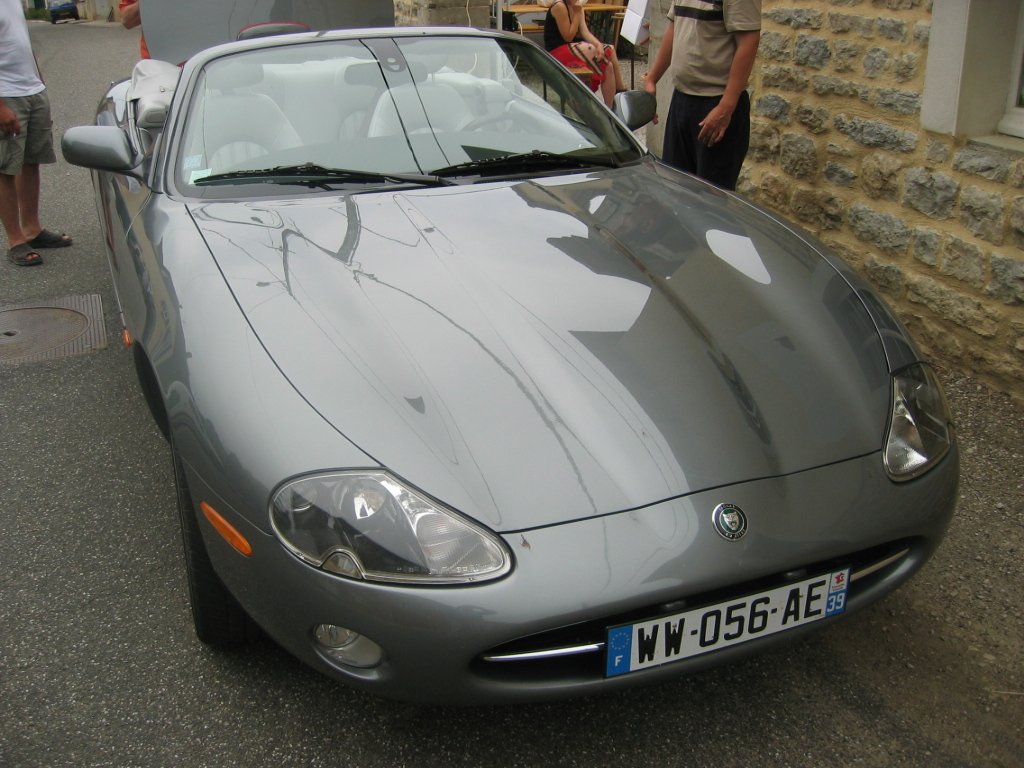
Short answer: The XK8 and XKR are the same car — Jaguar’s X100 grand tourer (1996–2006) — in two flavours. The XK8 has a smooth naturally aspirated V8 (290 bhp, later 300 bhp) and is the affordable, effortless cruiser. The XKR adds a supercharger for serious pace (370 bhp, later 400 bhp) and commands a premium. Both share the same two critical checks: the plastic timing-chain tensioners and, on pre-2000 cars, the Nikasil bore-liner issue — get these wrong and the bill is enormous. Prices start from around £3,500 for a running XK8, with good cars and XKRs worth more. Buy the XK8 for elegant, affordable GT motoring; buy the XKR for the performance — but on either, the engine’s history matters more than anything.
This is a “same car, different engine” comparison, so the choice is really about how much performance you want and what you’re prepared to spend — while the buying advice is almost identical for both. Here’s what matters.
XK8 vs XKR at a glance
| Jaguar XK8 | Jaguar XKR | |
|---|---|---|
| Platform | X100 (1996–2006) | X100 (1998–2006) |
| Engine | 4.0 / 4.2 V8, naturally aspirated | 4.0 / 4.2 V8, supercharged |
| Power | 290 bhp (4.0) · 300 bhp (4.2, from 2003) | 370 bhp (4.0) · 400 bhp (4.2, from 2003) |
| Character | Smooth, effortless cruiser | Rapid, muscular GT |
| Body | Coupé & convertible | Coupé & convertible |
| Typical UK values | From ~£3,500 (running) | Premium over XK8 |
Same GT, two personalities
The XK8 replaced the XJS in 1996 and introduced Jaguar’s AJ-V8: a 4.0-litre making 290 bhp, then a 4.2-litre with 300 bhp from 2003. It’s a relaxed, refined grand tourer — quick enough, beautifully styled, and the most affordable way into V8 Jaguar GT ownership.
The XKR, added in 1998, bolts a supercharger to the same V8: 370 bhp from the 4.0, and 400 bhp from the 4.2 (2003 on). It transforms the car’s character from smooth cruiser to genuinely rapid muscle-GT, with uprated brakes and suspension to match. It costs more to buy and drink, but it’s the one enthusiasts chase.
1. Timing-chain tensioners. Early cars used plastic secondary tensioners that can fail, causing a rattle and, at worst, catastrophic engine damage. Uprated metal tensioners were introduced and can be retrofitted — evidence they’ve been done is a big plus.
2. Nikasil bore liners (pre-2000 4.0 engines). Some early V8s suffered bore-liner erosion. Cars with a replacement post-September-2000 engine are safe; a “lumpy” running early car is a warning sign. Later 4.2 cars aren’t affected.
Also check front wishbone bushes and, on later cars, footwell corrosion. On either model, a car with a documented engine history is worth far more than a cheap one without.
Which one should you buy?
Buy the XK8 if you want an elegant, comfortable, affordable V8 grand tourer for relaxed cruising, and you don’t need supercharged pace. It’s superb value and the cheapest route into the X100.
Buy the XKR if you want the performance — the supercharged V8 makes it a properly fast, characterful GT — and you’re happy to pay more to buy and run it. The later 4.2 (400 bhp) is the pick if budget allows, partly because it sidesteps the pre-2000 Nikasil worry entirely.
Whichever you choose, the engine’s history is everything. A well-maintained car with the tensioners sorted and a clean bill of health is a wonderful thing; a cheap one with an unknown engine is a gamble. Buy the best-documented example you can, not the cheapest.
See the wider market
Live medians by era and marque, updated monthly, with the working shown.
Jaguar XK8 vs XKR: FAQs
What’s the difference between a Jaguar XK8 and XKR?
They’re the same X100 car with different engines. The XK8 has a naturally aspirated V8 (290 bhp from the 4.0, 300 bhp from the 4.2), while the XKR adds a supercharger for 370 bhp (4.0) or 400 bhp (4.2). The XKR also gets uprated brakes and suspension. In short, the XK8 is the smooth cruiser and the XKR is the fast one.
Are the XK8 and XKR reliable?
They can be, but two issues dominate buying decisions. Early cars used plastic timing-chain tensioners that can fail expensively, so uprated metal ones (or evidence they’ve been fitted) are strongly preferred. And some pre-2000 4.0 engines suffered Nikasil bore-liner erosion — cars with a post-September-2000 replacement engine are safe. A documented engine history matters more than mileage on either model.
How much does a Jaguar XK8 or XKR cost?
UK guides put running XK8s from around £3,500, with good, well-documented cars worth considerably more. The supercharged XKR commands a premium over the equivalent XK8. As with any cheap V8 GT, the lowest-priced cars are often the most expensive to own once the engine needs attention.
Is the XKR worth the extra over the XK8?
If you want performance, yes — the supercharged V8 makes the XKR a genuinely rapid and charismatic GT, and it’s the version enthusiasts seek out. If you mainly want comfortable, elegant cruising, the XK8 delivers most of the experience for less money to buy and run. Both share the same critical engine checks, so condition and history should drive the decision more than the badge.
Free checklist: The Classic Car Buyer’s Inspection Checklist
Print it and take it to the viewing — rust hotspots, MOT-history red flags, paperwork and the 8 walk-away signs. Enter your email and we’ll send you the PDF.