Updated 24 July 2026 · By Old Bangers Editorial
Short answer: The Land Rover Defender and Discovery are built for different jobs. The Defender is the utilitarian, body-on-frame icon — unbeatable off-road and now a genuinely appreciating classic. The Discovery takes the same rugged Land Rover engineering but wraps it in a more comfortable, family-friendly, seven-seat package that’s far better on the road. On Old Bangers today the median asking price is about £13,375 for a Defender versus £9,750 for a Discovery — the Defender commands a clear premium. Buy the Defender for character, capability and values that hold; buy the Discovery for far more car, comfort and space for the money.
Both wear the Land Rover badge and both will go further off-road than almost anything else, but they’re aimed at completely different buyers. Here’s how they compare, with live UK prices from our own database.
Defender vs Discovery at a glance
| Land Rover Defender | Land Rover Discovery | |
|---|---|---|
| Era covered | Classic Defender (to 2016) | Discovery 1–4 (1989–2016) |
| Construction | Body-on-frame, live axles | Rugged but more road-biased (later cars more refined) |
| Character | Utilitarian, agricultural on-road | Comfortable, family-friendly |
| Seats | Typically 2–7 (utility) | Up to 7 (family) |
| Best at | Extreme off-road, character, values | On-road comfort, space, value |
| Median asking (live) | £13,375 | £9,750 |
| Live price range | £4,900 – £65,999 | £1,500 – £21,500 |
Live UK market — 24 July 2026
Land Rover Defender: 52 live listings, median asking £13,375 (range £4,900–£65,999)
Land Rover Discovery: 14 live listings, median asking £9,750 (range £1,500–£21,500)
Live asking-price medians from Old Bangers listings on the date shown, duplicates removed. The Defender sample spans classic models up to 2016; the live Discovery stock skews towards the later Discovery 3 and 4.
Two different Land Rovers
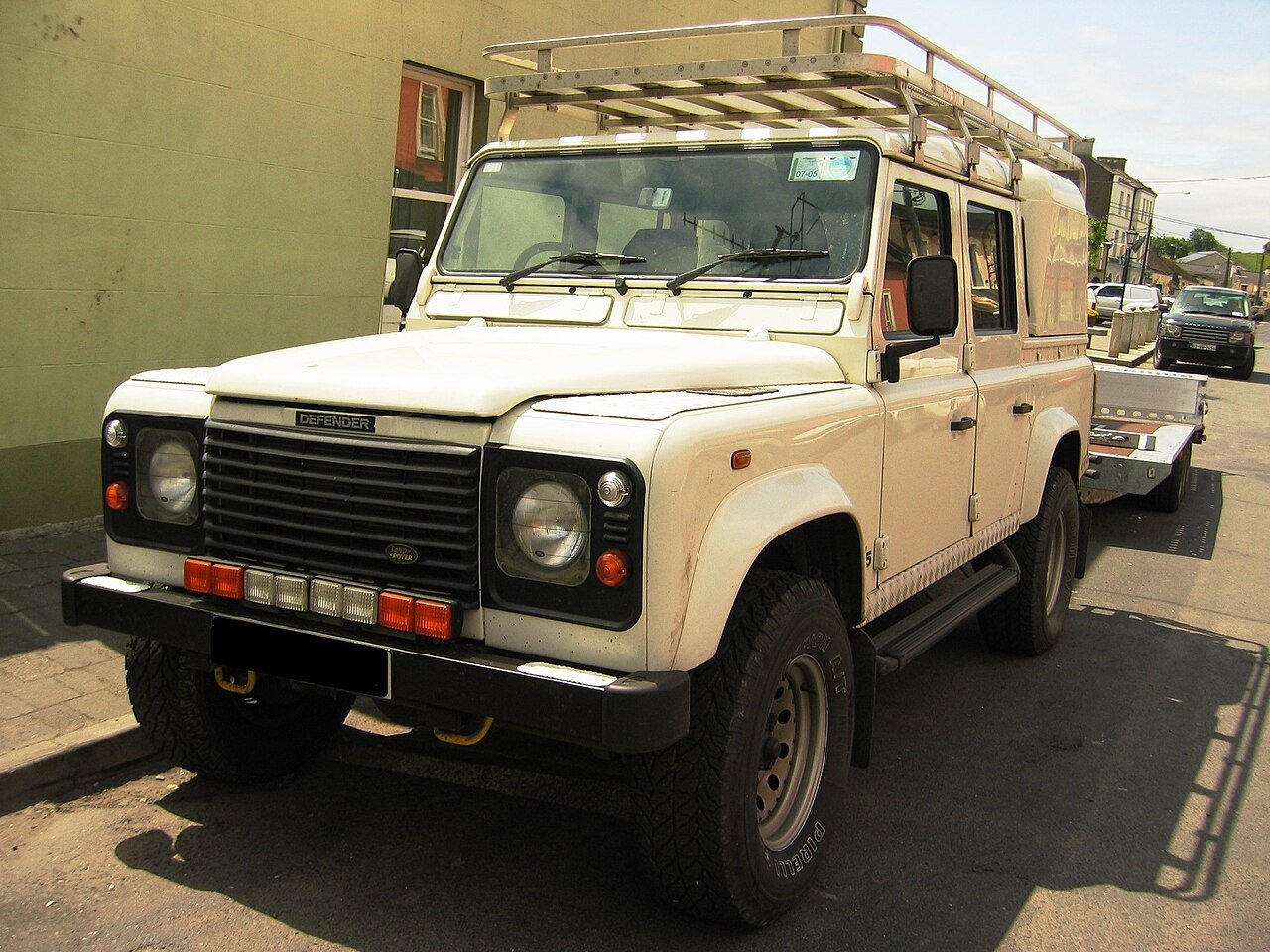
The Defender (the name arrived in 1990, but the shape dates back to the original Land Rover) is body-on-frame, with a ladder chassis, live axles and aluminium panels. Over its long life it ran a series of diesels — the 200Tdi and 300Tdi, then the five-cylinder Td5 (1998–2007) and the 2.2/2.4 TDCi “Puma” (2007–2016). It’s the definitive go-anywhere machine, but it’s noisy, slow and firm on the road, and practicality is basic. Its reward is unburstable character and the fact that good ones now appreciate.
The Discovery takes similar underpinnings and makes them liveable. Discovery 1 (1989–1998) and 2 (1998–2004) shared much with the Range Rover and Defender but added comfort, space and up to seven seats; Discovery 3 (2004–2009) and 4 (2009–2016) moved to a far more sophisticated, road-refined platform with the TDV6 diesels. A Discovery is the one you’d actually want to drive to work and take the family away in — still hugely capable off-road, but vastly more comfortable on it.
Which one should you buy?
Buy the Defender if you want the icon: maximum off-road ability, unmistakable character, simple mechanicals and the reassurance of strong, holding values. It’s the enthusiast’s and the worker’s choice — and increasingly a genuine classic investment, though never buy on that basis alone.
Buy the Discovery if you want the most usable, comfortable, spacious 4×4 for your money. It gives you Land Rover capability with none of the Defender’s on-road compromises, and the live figures show it typically costs several thousand pounds less.
Whichever you choose, condition and documented history matter more than mileage or spec. Budget for maintenance, buy the best-kept example you can, and walk away from anything with a suspect chassis or a patchy history.
See the wider market
Live medians by era and marque, updated monthly, with the working shown.
Defender vs Discovery: FAQs
Is the Defender or Discovery better off-road?
Both are exceptionally capable, but the classic Defender is the more focused off-roader thanks to its body-on-frame construction, live axles and utilitarian design. The Discovery is also highly capable — especially later models with advanced traction systems — while being far more comfortable on the road. For extreme, unrelenting off-road use, the Defender has the edge; for mixed use, the Discovery is more rounded.
Why is a Defender worth more than a Discovery?
The classic Defender has become a sought-after icon with strong, appreciating values, driven by its character, simplicity and cult status. The Discovery, while excellent, was built in larger numbers as a family vehicle and depreciated more conventionally. On Old Bangers as of 24 July 2026 the Defender median is about £13,375 versus £9,750 for the Discovery.
Which is more reliable, a Defender or a Discovery?
Both need diligent maintenance and both can suffer corrosion. The Defender is mechanically simpler, which can make repairs more straightforward, but chassis and bulkhead rust are common. The Discovery adds more comfort and complexity — later cars have air suspension and more electronics to maintain. On either, a documented history and a rust-free chassis matter far more than mileage.
Which should I buy for family use?
The Discovery. It offers up to seven seats, far more comfort and space, and a much more civilised on-road experience, especially the Discovery 3 and 4. The Defender is characterful but compromised as a family car — noisy, firm and basic inside — and usually costs more to buy.
Free checklist: The Classic Car Buyer’s Inspection Checklist
Print it and take it to the viewing — rust hotspots, MOT-history red flags, paperwork and the 8 walk-away signs. Enter your email and we’ll send you the PDF.