Updated 24 July 2026 · By Old Bangers Editorial
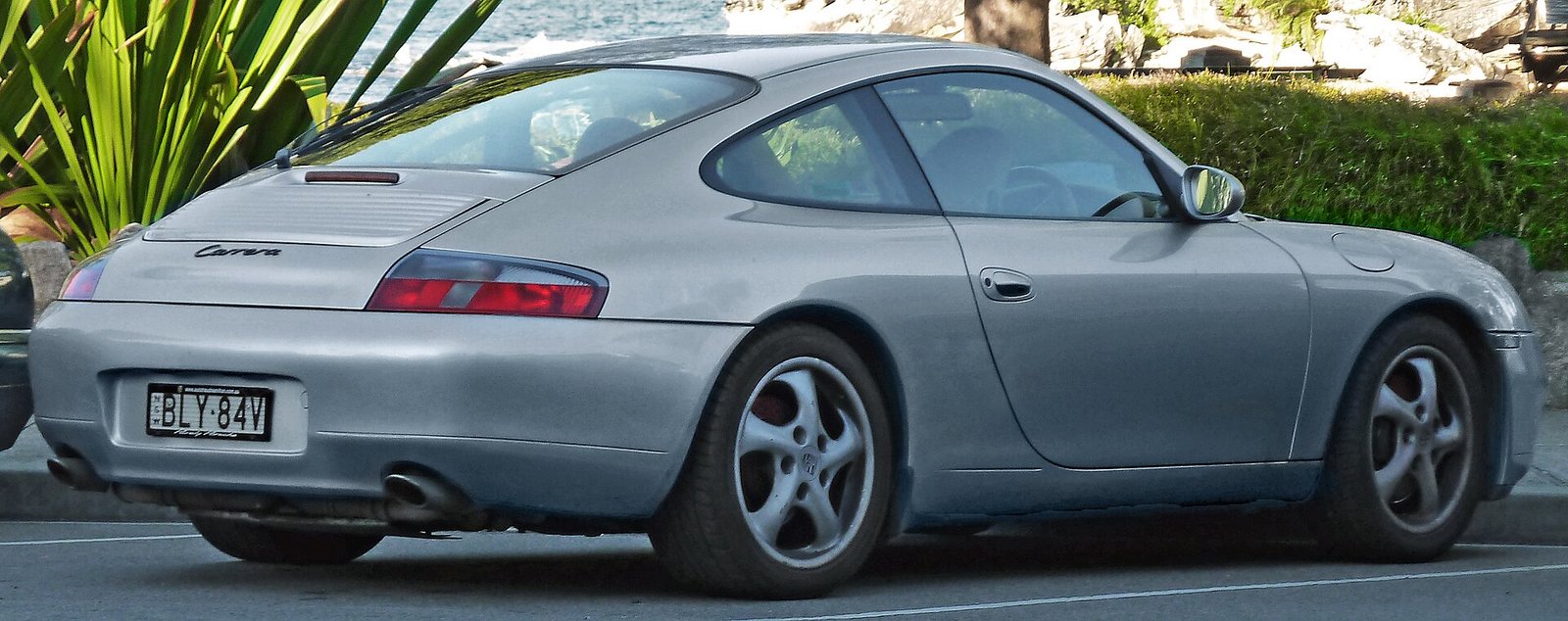
Short answer: The Boxster 986 and 911 996 are close cousins — both the first water-cooled cars in their lines, both built around the same M96 flat-six, and famously sharing a front-end and much of the cabin. The 996 is the faster, more prestigious 2+2 with a rear engine and the stronger residuals; the mid-engined Boxster is the sweeter-handling, far cheaper way into the same ownership experience. On Old Bangers today the median asking price is about £6,000 for a 986 versus £22,000 for a 996-generation 911 — so the 911 costs roughly three-to-four times as much. Buy the Boxster for value and balance; buy the 996 for outright pace, badge and a usable pair of rear seats.
These two are the most misunderstood bargains in modern Porsche ownership, and they’re endlessly cross-shopped for a simple reason: Porsche built them alongside each other in the late 1990s and deliberately shared parts to save money. That shared DNA is the whole story — it’s why they cost so little to run relative to the badge, why they suffer the same headline engine worry, and why choosing between them comes down to layout and budget rather than reliability. Here’s how they actually compare, with live UK prices from our own database rather than opinion.
Boxster 986 vs 911 996 at a glance
| Porsche Boxster (986) | Porsche 911 (996) | |
|---|---|---|
| Years | 1996–2004 | 1997–2005 (Carrera) |
| Layout | Mid-engined, RWD | Rear-engined, RWD (C4 = AWD) |
| Body | 2-seat roadster (convertible) | 2+2 coupé, cabriolet, Targa |
| Engine | Flat-six (M96) | Flat-six (M96 Carrera) |
| Capacity / power | 2.5 (204 PS) · 2.7 (220–225 PS) · S 3.2 (250–258 PS) | 3.4 (300 PS) · 3.6 (320 PS, from 2002) |
| Median asking (live) | £6,000 | £21,995 |
| Live price range | £3,500 – £8,250 | £11,000 – £45,995 |
Live UK market — 24 July 2026
Boxster (986): 7 live listings, median asking £6,000 (range £3,500–£8,250)
911 (996-era): 25 priced listings, median asking £21,995 (range £11,000–£45,995)
Figures are live asking-price medians from Old Bangers listings on the date shown, duplicates removed. The 996’s upper range reflects low-mileage cars and rarer variants; entry-level 996 Carreras start around £11,000.
The headline gap is real but narrower in the metal than the medians suggest. A tidy, higher-mileage 996 Carrera and a really good Boxster S can end up closer than you’d think, because the best 986s now command a premium while ordinary 996s have drifted down. For a full breakdown of both, see our Porsche 996 price guide and Boxster 986 price guide.
The shared DNA: same engine, same worry
This is the single most important thing to understand before you buy either car. The naturally aspirated 996 Carrera and every 986 Boxster use versions of the same M96 flat-six. That means they share the same well-documented weak point: the intermediate shaft (IMS) bearing, which can fail and, in the worst cases, destroy the engine. Early cars (roughly 1998–1999) used a larger dual-row bearing that’s generally regarded as more robust; later single-row cars (around 2002 onward) are the higher-risk period. The fix is a known quantity — the bearing can be upgraded during a clutch change — and a car with a documented IMS upgrade is worth seeking out. We cover the year-by-year detail in our 996 common problems guide, and the same logic applies to the Boxster because it’s the same engine family.
One crucial exception: the 996 Turbo, GT3 and GT2 do not use the M96. They use the older Mezger engine derived from Porsche’s racing units, which has no IMS bearing concern. Those variants sit well above the prices discussed here, but it’s worth knowing that the IMS worry applies only to the ordinary Carrera and the Boxster.
How they drive
Here opinion, rather than data, does the talking — and the motoring press has been remarkably consistent for 25 years. The Boxster’s mid-engined layout gives it near-perfect balance, and it’s widely regarded as one of the sweetest-handling affordable sports cars ever made; many reviewers rated its chassis as more naturally adjustable than the contemporary 911’s. The trade-off is pace and drama: even a Boxster S has meaningfully less power than a 996 Carrera.
The 996, with its engine behind the rear axle, delivers the classic 911 traits — strong traction out of corners, a distinctive on-limit character, and the flexibility of that flat-six. It’s the faster car in a straight line and the more special thing to own, and its 2+2 cabin makes it usable in a way the strictly two-seat Boxster isn’t. Which you prefer is genuinely a matter of taste and use case, not right-and-wrong.
Which one should you buy?
Buy the Boxster 986 if your budget is under roughly £10,000, you want the purest handling for the money, and a two-seat convertible suits your life. It’s the most car-per-pound in this pairing and the cheapest genuine route into water-cooled Porsche flat-six ownership.
Buy the 911 996 if you want the badge, the extra performance, a coupé with occasional rear seats, and the stronger long-term residuals that come with the 911 name. It costs more to buy and, generally, a little more to run — but it’s the car many buyers ultimately trade up to.
Whichever way you lean, condition and history trump specification on both. A well-sorted, IMS-addressed Boxster is a far better buy than a neglected, cheap 996 — and vice versa. Set your budget against the live figures above, then buy the best example you can find rather than the cheapest.
See what each one is actually worth
Live values, common faults and what to pay — broken down car by car.
Boxster 986 vs 911 996: FAQs
Is a Boxster 986 just a cheaper 911?
Not quite, but they’re closely related. The 986 Boxster and 996 911 were developed together and share the same front-end styling, much of the interior, and the M96 flat-six engine family. The key differences are layout (the Boxster is mid-engined, the 911 rear-engined), body (two-seat roadster versus 2+2 coupé/cabriolet) and power (the 911 Carrera is significantly more powerful). So it’s a close cousin rather than simply a cut-price 911.
Do the Boxster 986 and 996 have the same engine problems?
Largely yes. Both use the M96 engine, so both can suffer the intermediate shaft (IMS) bearing failure, bore scoring and rear main seal leaks. Early cars used a stronger dual-row IMS bearing; later cars are higher risk. The exception is the 996 Turbo, GT3 and GT2, which use the different Mezger engine and don’t have the IMS concern. A specialist pre-purchase inspection is essential on either car.
Which is faster, a Boxster S or a 996 Carrera?
The 996 Carrera is faster. A 996 Carrera produces 300 PS (3.4-litre) or 320 PS (3.6-litre from the 2002 facelift), while the most powerful 986, the Boxster S, makes 250–258 PS. The Boxster is lighter and superbly balanced, so it feels rapid and agile, but the 911 has the clear performance advantage.
Is the 996 a better investment than the Boxster?
Historically the 911 badge has held value better than the Boxster, and 996 prices have firmed as the model is reassessed. But neither is a guaranteed appreciating asset, and a poor example of either can cost more in repairs than it ever gains in value. This isn’t financial advice — buy the best-maintained car you can and treat any future value gain as a bonus. See our guide on whether classic cars are a good investment.
How much does a Porsche Boxster 986 or 911 996 cost in 2026?
On Old Bangers as of 24 July 2026, the median asking price is about £6,000 for a Boxster 986 (from around £3,500) and about £22,000 for a 996-generation 911 (from around £11,000). Condition, history and a documented IMS upgrade have a big effect on where a car sits in those ranges.
Free checklist: The Classic Car Buyer’s Inspection Checklist
Print it and take it to the viewing — rust hotspots, MOT-history red flags, paperwork and the 8 walk-away signs. Enter your email and we’ll send you the PDF.