Somewhere in the late 1990s, BMW briefly forgot to build down to a price. The result was the E39 5 Series: a saloon so over-engineered that a quarter of a century later, specialists still talk about it the way furniture people talk about mid-century Danish teak. Doors that close like bank vaults. Aluminium suspension. A straight-six that idles like a sewing machine at 150,000 miles.
Every word ever written about E39s in the UK seems to be about the M5, which is a shame, because the M5 is now serious money and the other 95% of E39s — the 523i, 528i, 530i, the V8 540i, the mighty 530d — deliver most of the same experience for the price of a used Dacia. This is the guide to those cars: which engine to buy, what actually goes wrong (verified, not forum folklore), what Sport trim really got you, and what E39s are genuinely selling for in 2026.
One warning before we start, and it’s the theme of this entire guide: the E39 is a cheap car built to an expensive standard. The purchase price is the deposit. A neglected one will quietly bankrupt you in £80 bushes, gaskets and cooling parts — so buy the best-condition car you can find and treat the spec sheet as a tiebreaker.
Quick answer: The sweet spot is a post-2000 530i Sport — ideally a manual — with the cooling system already refreshed. Want to cover big miles? The 530d. Want the V8 soundtrack? The 540i is glorious but demands a documented timing-chain-guide history. As of July 2026, usable six-cylinder cars sell from around £2,500–£5,000; the best go well beyond that.
What the E39 is — and why it’s revered
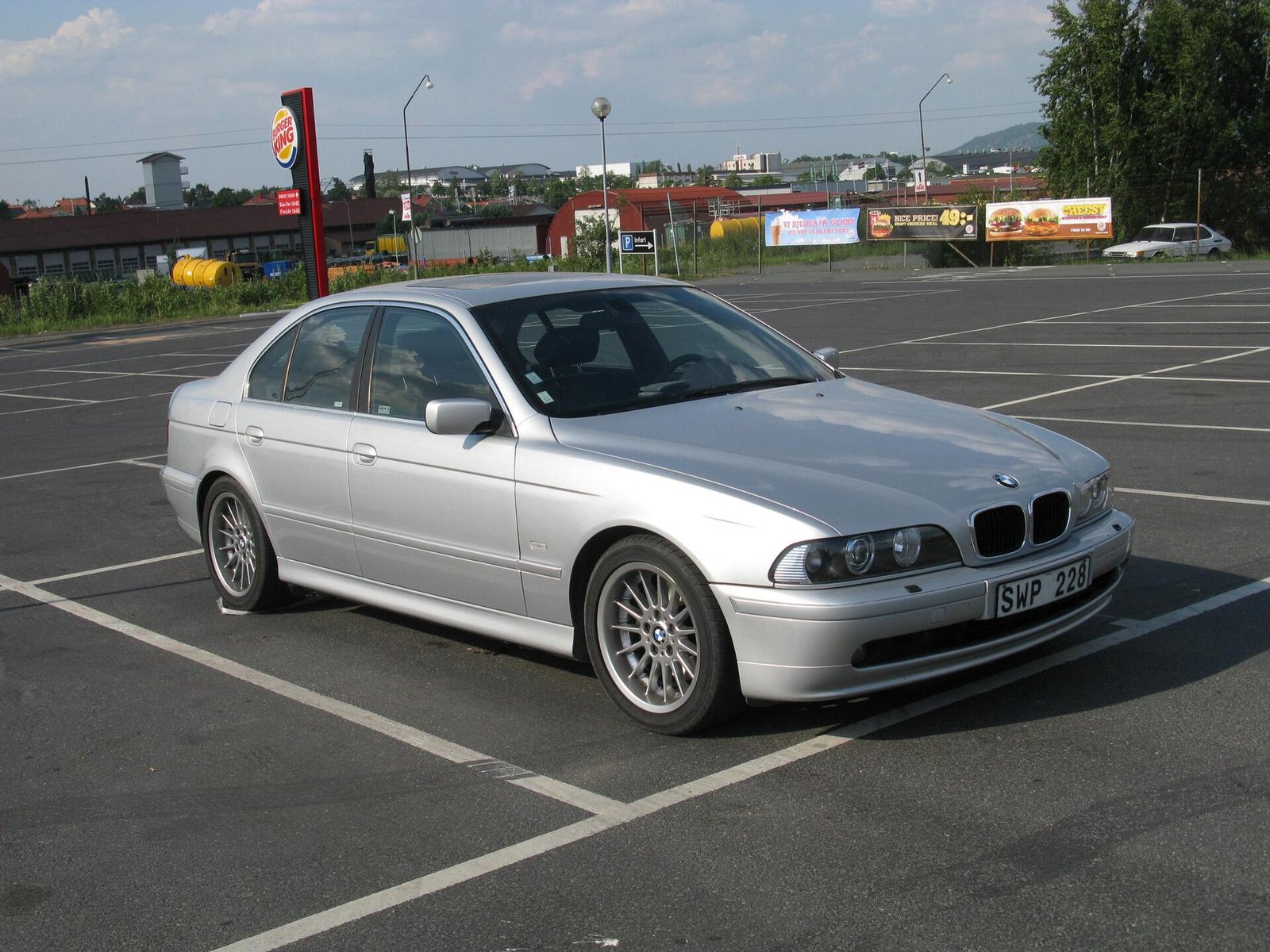
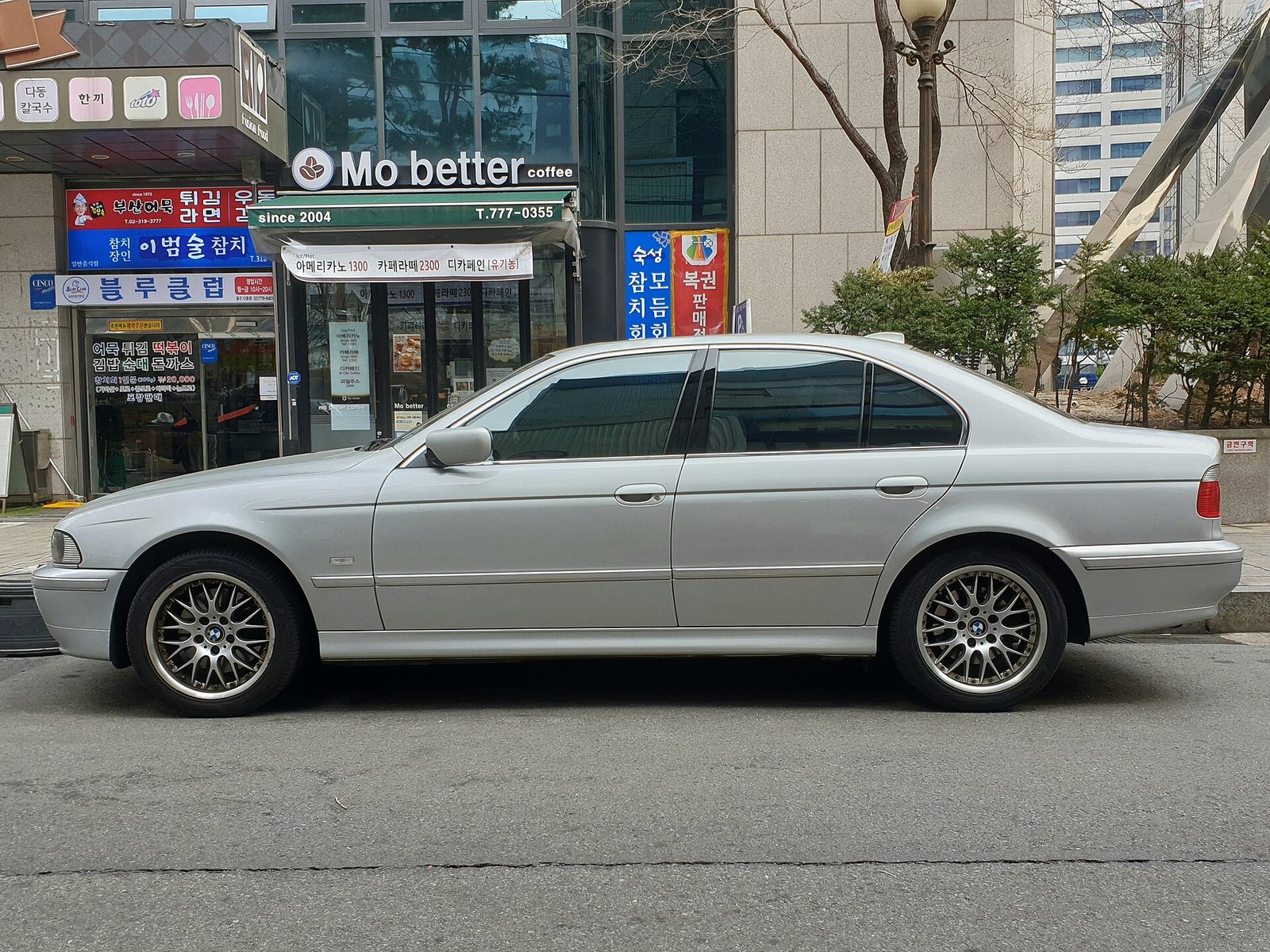
The E39 was the fourth-generation 5 Series, revealed in 1995 with UK saloons arriving in 1996 and the Touring estate following in 1997. Its clean, fuss-free shape came from BMW designer Joji Nagashima, whose proposal was selected back in June 1992 — and it has aged better than almost anything else from the decade. The saloon ran until 2003; the Touring soldiered on into 2004. Around 1.5 million were built, nearly all at Dingolfing.
The engineering was the story. The E39 used aluminium front and rear suspension to cut unsprung weight, and every four- and six-cylinder car got rack-and-pinion steering — a big part of why the six-cylinder cars steer with a delicacy that shames plenty of modern sports saloons. (V8 models used a recirculating-ball setup to clear the wider engine; accurate, but less chatty.) The critical consensus has never really wavered: Hagerty’s retrospective calls the E39 “as good as this type of car got in its day”, and period road tests routinely crowned it the best all-round saloon on sale. It’s frequently cited as the high-water mark of BMW build quality — the last 5 Series before cost-down interiors, run-flat tyres and iDrive.
A facelift in September 2000 brought the “angel eye” headlights, wider chrome grille strips and LED-strip tail lamps, along with the M54 petrol engines and a stronger 530d. Facelift cars are the ones to have, though early cars have a purity of their own.
The engine range: what you’re choosing between
UK E39s came with a broad spread of petrol sixes, two V8s and three diesels. All figures below are the commonly quoted factory outputs.
| Model | Engine | Years | Power | Worth knowing |
|---|---|---|---|---|
| 520i | M52/M52TU 2.0 six, later M54 2.2 | 1996–2003 | 148bhp / 168bhp | Sweet but slow in a heavy car; the 2.2 M54 is usefully brisker |
| 523i | M52/M52TU 2.5 six | 1996–2000 | 168bhp | Confusingly a 2.5 — honest, smooth, cheap to buy |
| 525i | M54 2.5 six | 2000–2003 | 189bhp | The 523i’s facelift replacement; a fine compromise |
| 528i | M52/M52TU 2.8 six | 1996–2000 | 190bhp | The pre-facelift pick; relaxed, torquey, understressed |
| 530i | M54 3.0 six | 2000–2003 | 228bhp | The sweet spot — genuinely quick, still simple |
| 535i / 540i | M62/M62TU 3.5 / 4.4 V8 | 1996–2003 | 232–241bhp / 282bhp | Effortless V8 muscle; more to go wrong (see below) |
| 520d / 525d | M47 2.0 / M57 2.5 diesel | 2000–2003 | 134bhp / 161bhp | Rare and unloved; the 525d is the better of the two |
| 530d | M57 3.0 straight-six diesel | 1998–2003 | 181bhp, later 190bhp | The legendary galactic-mileage engine — with one caveat |
Which one should you actually buy?
The 530i Sport manual is the enthusiast’s answer — nearly all of the M5’s flavour at a tenth of the money, with the M54’s free-revving 228bhp, rack-and-pinion steering and none of the V8’s extra plumbing. Manuals are rare (most E39s are automatics) and worth holding out for, though a healthy Steptronic auto suits the car’s character too.
The 530d is the one for big miles. The M57 straight-six diesel made the E39 a genuine 40-plus-mpg motorway express, and the engine itself is famously long-lived — it’s the reason so many 530ds survive with lunar mileages. The caveat: from roughly 2001, the inlet manifold’s swirl flaps could break up and get ingested by the engine, wrecking it — a well-documented failure noted by Honest John. Earlier 530ds don’t have the problem; on later cars, look for evidence the flaps have been removed or blanked. It’s a cheap preventative job and a standard specialist fix.
The 540i is the romantic’s choice — 282bhp of woofly 4.4-litre V8, near-M5 pace in a car nobody looks at twice. Buy one with your eyes open: the M62 has its own fault list (timing chain guides above all), it’s thirsty, and the recirculating-ball steering trades some feel for isolation. A cherished 540i is a wonderful thing; a £2,500 one is a countdown timer.
The 523i and 528i are the honest bargains. Pre-facelift cars are now the cheapest way into a straight-six E39, and a good 528i in particular — torquey, understressed — makes a lovely low-stress classic. The 520i works best as a “buy on condition” car: if the best-kept E39 in your budget happens to be a 520i, it’s still a better daily than a ragged 540i.
What goes wrong: the verified fault list
Nothing here is exotic, and almost all of it is well understood by specialists. The pattern across every E39 is the same: brilliant core engineering surrounded by consumables that were engineered to last one healthy service life, not twenty-five years.
The cooling system — the classic ~100k service
The number one E39 killer. The cooling system — water pump, thermostat and housing, expansion tank, radiator, hoses — is largely plastic and ages badly; FCP Euro’s guide recommends refreshing the whole lot every 100,000 miles as preventative maintenance rather than replacing parts one by one as they fail. The reason it matters: overheating is the main cause of head gasket failure on the M52 and M54 sixes, as the Classics World buyer’s guide notes. On V8s, add coolant leaks from within the engine’s valley to the checklist. A folder with a recent “full cooling refresh” invoice is worth paying real money for; a car with no cooling history should be priced as if the job is imminent, because it is.
VANOS seals (M52TU and M54 sixes)
The double-VANOS variable valve timing on post-1998 sixes uses rubber seals that harden with age, sapping low-down torque and causing lumpy idling and poor economy. It rarely strands anyone — plenty of owners drive around it for years — and specialists rebuild the units with uprated seals as a routine job. Listen for VANOS rattle on a test drive and treat it as a negotiating point rather than a deal-breaker.
The V8’s homework: timing chain guides (and those Alusil bores)
All E39 engines — petrol and diesel — are chain-driven; there are no cambelts to change. On the sixes the chains are effectively lifetime items. The M62 V8 is the exception: it uses a single-row chain with plastic guides, and those guides embrittle and break up, typically somewhere in the 100,000–200,000-mile range. Let them fail and the chain can jump, with engine-destroying results — which is why V8 specialists treat guides, tensioner and chain as a preventative replacement job on high-mile cars. Rattly cold starts and whining from the front of a 540i are your cue to walk away or budget accordingly. The later M62TU adds single-VANOS, which brings its own well-known noise and seal issues.
On bores: the early-1990s Nikasil saga — where high-sulphur fuel damaged cylinder linings on the previous M60 V8 — is ancient history, and most M62s use an Alusil block that doesn’t suffer the sulphur problem. The flip side is that Alusil blocks can’t just be rebored by any machine shop; a genuinely worn, smoky, oil-drinking M62 usually means sourcing another engine rather than machining this one. So with V8s more than any other E39, buy on evidence of health, not promises.
Suspension: the thrust arm shimmy
The definitive E39 symptom: a steering wheel that shimmies under braking from motorway speeds. That’s the front thrust arm bushes — hydraulic-filled rubber items that degrade with age — and it’s so common it’s practically a rite of passage. The bushes themselves are cheap; pressing them in (or fitting complete arms) is the labour. At the back, worn bushes announce themselves with clonks and uneven rear tyre wear. None of this is expensive individually — it’s the accumulation on a neglected car that hurts.
ABS module — the “trifecta” lights
If the ABS, brake and traction-control lights all come on together, that’s the classic Bosch 5.7 ABS/DSC module failure. The good news: it’s a solder-fatigue fault that repair specialists such as ECU Testing fix routinely, and Honest John quotes overhaul costs of roughly £250–£350 — far less than a new unit. Common, known, fixable: the E39 fault list in miniature.
Pixels, windows and other electrical niggles
Missing pixels in the instrument cluster and the dash’s Multi-Information Display are near-universal; repairers replace the ribbon cables for sensible money, so don’t let a seller wave it off as “they all do that” without a discount. Window regulators, door lock actuators and slow battery drains round out the usual electrical suspects. All fixable, all cheaper if the last owner did them for you.
Automatic gearboxes: “sealed for life” is a lie
Most E39s are automatics, using ZF or GM boxes that BMW claimed were sealed for life. In practice, “life” meant about 120,000–150,000 miles on unchanged fluid; cars whose owners flushed the fluid and filter every 60,000 or so just keep going. Ask when the gearbox was last serviced. If the answer is “it’s sealed for life”, smile, and adjust your offer.
Rust — yes, really
The E39 resists rot far better than most of its era, but the survivors are now old enough to check properly: wheelarch lips, sills, around the fuel filler, the underside of the bonnet, above the rear bumper — and the jacking points, which are a known corrosion spot. A shiny top surface can hide crusty sills; take a torch and push fingers where the seller would rather you didn’t.
Sport vs SE (and the ES): what the badges actually meant
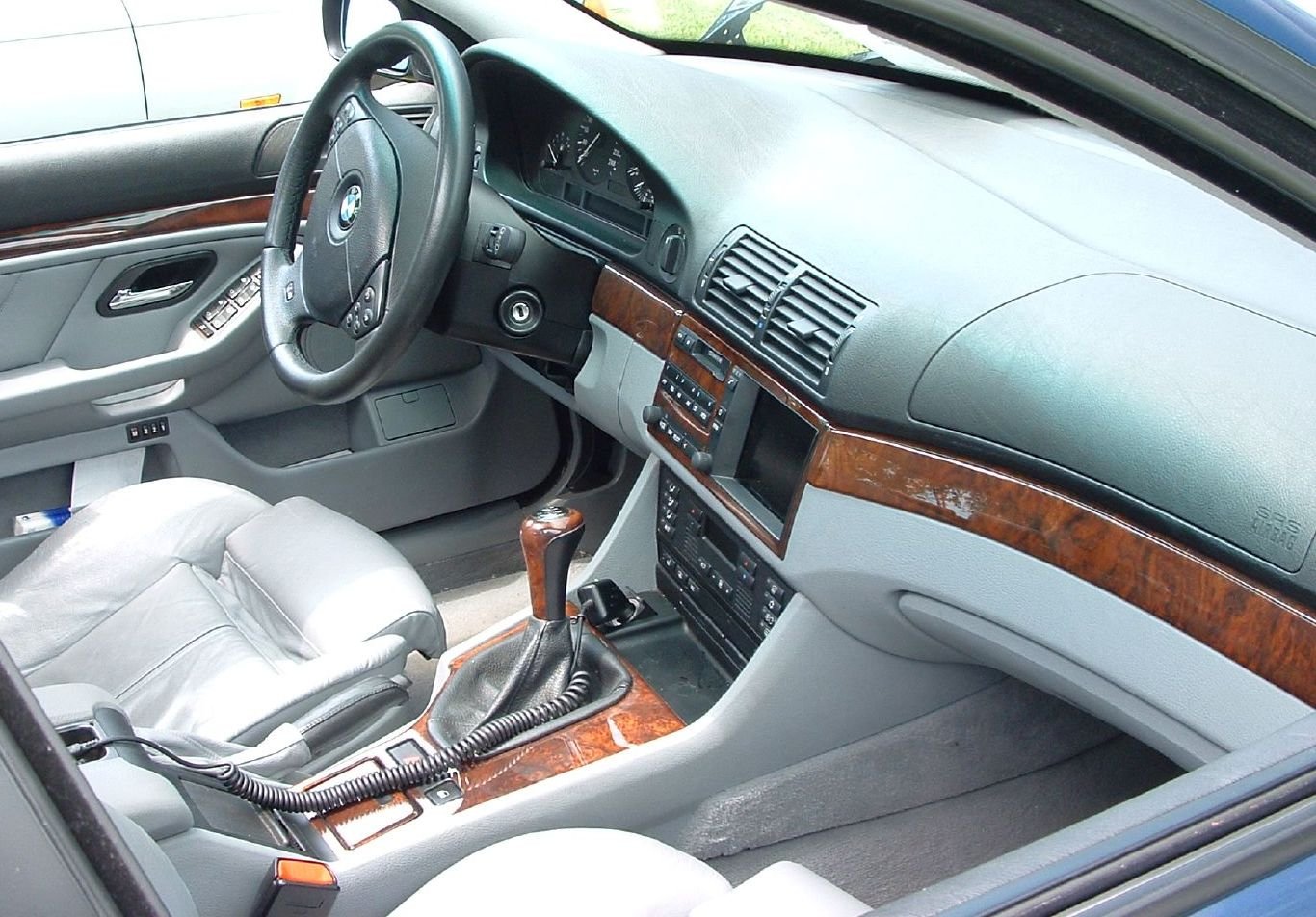
Most UK cars are SEs: air conditioning, alloy wheels, front fog lamps and the on-board computer over the base car. From 1999, Sport trim added the aero bodykit, lowered and stiffened sports suspension, sports front seats, a chunkier steering wheel, 18-inch alloys, brushed aluminium interior trim and Sport kick plates. After the facelift a value-led ES trim appeared, mixing SE and Sport elements at a lower price.
Sports look fantastic and hold their value best — the market has decided, and a 530i Sport manual is the blue-chip non-M spec. But here’s the unfashionable truth: an SE with a fat history file beats a scruffy Sport every single time. The Sport bits are trim and suspension; the £2,000 of cooling, bushes and gearbox servicing is the same on both, and it’s the history that tells you whether it’s been done. Buy condition, then spec.
Saloon or Touring?
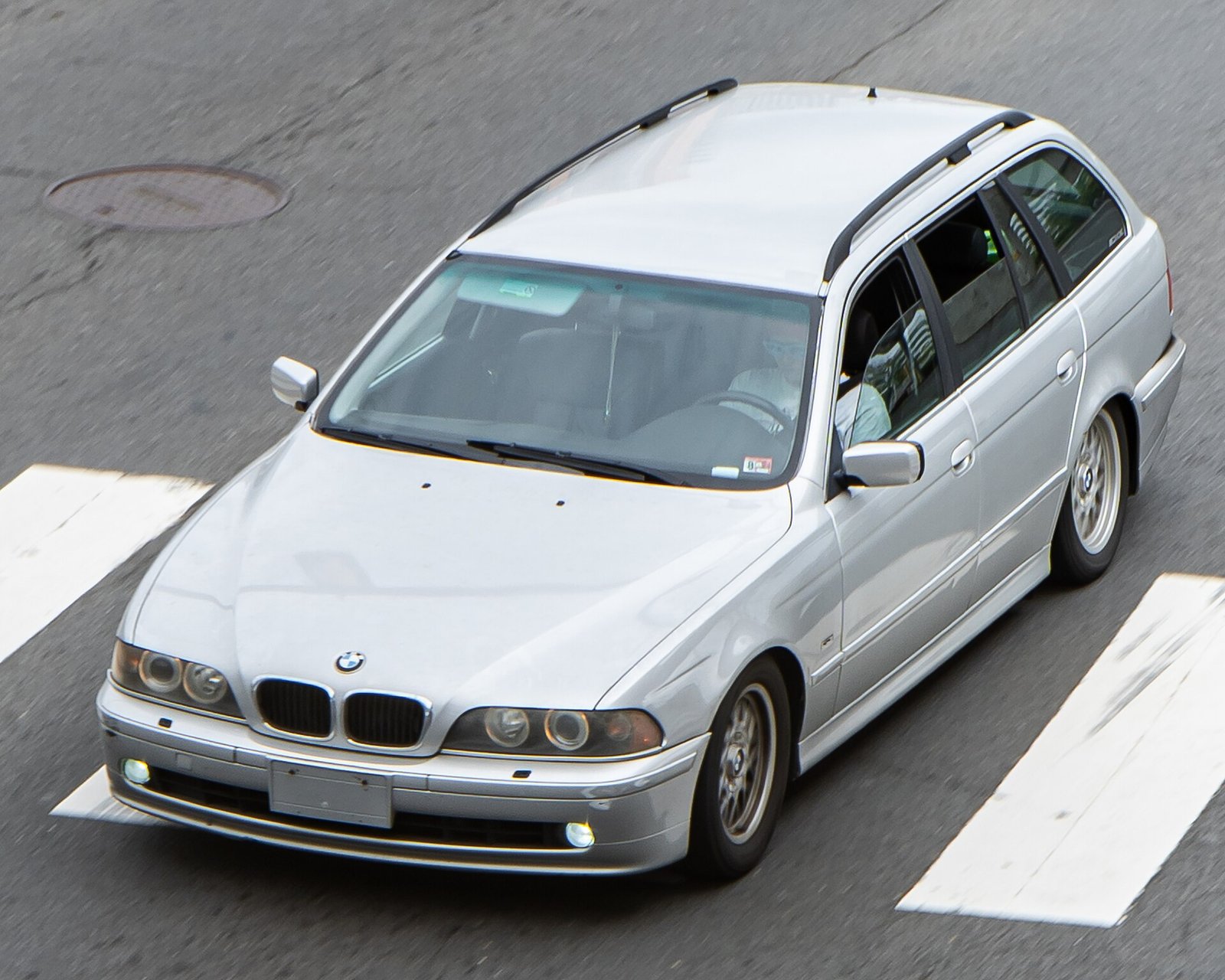
The Touring is one of the best-looking estates BMW ever made, swallows a genuinely vast load, and the tailgate’s separately opening glass remains one of motoring’s great small pleasures. It carries two ownership asterisks — the self-levelling rear suspension above, and the fact that far fewer were sold, so finding a good one takes patience. Tidy Tourings, especially six-cylinder Sports and the rare 540i Touring, tend to sell quickly when they surface. If you need one car for everything, the Touring is arguably the most usable modern classic estate money can buy right now.
What does an E39 cost in 2026?
Based on UK classifieds visible at the time of writing (July 2026): the bottom of the market still exists — high-mileage or cosmetically tired cars advertise below about £3,000, with running early sixes seen from around £2,000 on Car & Classic. Solid, usable six-cylinder cars mostly sit between roughly £2,500 and £7,000 — a 125,000-mile 2002 530i was asking £6,500 on Car & Classic in July 2026. Good V8s command more — 540i M Sports were advertised up to about £15,000 — and the best low-mileage, big-history cars, particularly 530i Sport manuals and clean 540is, push towards five figures. Asking prices aren’t sold prices, of course — which is rather the point of this site.
Direction of travel? Qualitatively, the good cars are hardening. Hagerty notes that cared-for original examples are thinning out and attracting stronger prices, and the auction results above bear that out — while project-grade cars remain cheap, because everyone knows what a neglected E39 costs to put right. The gap between the best and the rest is widening, which is exactly what happens as a car turns from old banger into modern classic. That’s the argument for buying the best one you can now.
Track the E39 market with real data
Old Bangers tracks live listings and sold prices across UK auction platforms and marketplaces — including BMW 5 Series listings live on the site right now. See what’s actually for sale and what’s actually selling:
Browse the BMW market hub · or search every marque and model via live listings search.
Running one: the honest picture
Here’s the good news the fault list obscures: a sorted E39 is one of the easiest classics of all to actually use. Parts supply is superb, servicing is straightforward DIY or cheap independent work, and the car itself — refined, comfortable, quick enough in any six-cylinder form — asks for none of the allowances a older classic demands. It’s precisely the kind of car we had in mind when we wrote about daily driving a classic car: modern enough to commute in, characterful enough to make you take the long way home. Budget properly for the catch-up maintenance in year one, and running costs settle down to little more than any elderly executive saloon — with the V8s adding a healthy fuel bill and bigger consumables to the tally.
Alternatives worth a look
The obvious cross-shop is Stuttgart: the Mercedes W210 E-Class is cheaper and comfier but rusts with real enthusiasm, while the older W124 is tougher-built and now more expensive than the equivalent E39. The Audi A6 (C5) undercuts both and looks sharp, but drives with less sparkle. Jaguar’s S-Type has depreciated into hilarious value and the V8s sound wonderful, though build quality is a lottery the BMW doesn’t make you play. And if you don’t need the size, the BMW E46 3 Series delivers the same era of BMW engineering in a smaller, cheaper package — check our BMW market pages for what all of them are making. None of them, for our money, blends quality, dynamics and usability like the E39. That’s why you’re reading this guide and not theirs.
Frequently asked questions
Which E39 engine is the most reliable?
The six-cylinder petrols — especially the M54 in the 525i and 530i — with the M57 530d close behind on sheer longevity. All sixes need the cooling system treated as a service item and may want a VANOS reseal; the 2001-on diesels need their swirl flaps addressed. The M62 V8 is durable too, but only with its timing chain guides done — it’s the engine where history matters most.
Are BMW E39 prices going up?
The best cars are strengthening: Hagerty reports cared-for original examples thinning out and attracting stronger prices, and mid-2026 UK auction results for good 530i Sports and 540is support that. Scruffy, history-free cars remain cheap, because the cost of recommissioning one is well understood. The gap between good and rough is widening.
How much should I pay for an E39 in 2026?
As of July 2026, based on visible UK auction results and classifieds: tired-but-running cars below about £3,000; solid usable six-cylinder cars roughly £2,500–£6,000; strong 530i Sports and good V8s £6,000–£10,000; exceptional low-mileage cars beyond that. Spend more on condition and history, not on badge or spec.
Is the 540i expensive to run?
Compared with the sixes, yes: expect a substantial fuel bill, pricier consumables, and the big one — preventative timing chain guide replacement on cars that haven’t had it, which is a labour-heavy job. Buy a 540i that’s already been sorted and it’s a surprisingly civilised companion; buy a cheap one and you’ll fund the previous owner’s deferred maintenance.
Are parts still available for the E39?
Excellent availability. Mechanical and service parts are plentiful and cheap from mainstream European suppliers, BMW still supports much of the car, and the enormous worldwide E39 community means guides, specialists and used parts are everywhere. Some interior trim and colour-specific pieces are getting scarcer, so a complete, unmolested car is worth a premium.
Should I buy a saloon or a Touring?
Saloons are more plentiful, slightly cheaper and simpler at the back. The Touring adds huge practicality and the brilliant opening tailgate glass, at the cost of the self-levelling rear air suspension — a known leak point in old age — and a much thinner supply of good cars. If you find a well-kept Touring in the right spec, they rarely hang around.
Verdict
The E39 is the rare classic where the received wisdom is simply true: this was BMW at the absolute top of its game, and nothing the company has built since feels quite so thoroughly engineered. That the non-M cars still trade at ordinary-hatchback money is one of the great bargains in the old-car world — and it won’t be true forever, on the evidence of what the good ones now make. The rules are short. Six-cylinder Sport manual if you can, 530d for miles, 540i with a folder full of receipts. Cooling system history or money off. Condition over spec, always. Do that, and you’ll own the best saloon of its era for the price of its own options list.
Found this useful? The next step is finding the car.
Browse every BMW for sale across UK marketplaces and auctions — with sold prices to keep you honest.
Free checklist: The Classic Car Buyer’s Inspection Checklist
Print it and take it to the viewing — rust hotspots, MOT-history red flags, paperwork and the 8 walk-away signs. Enter your email and we’ll send you the PDF.