Somewhere around 6,000rpm, an EP3 Civic Type R stops being a sensible Honda hatchback. The second cam profile engages, the intake note hardens into something closer to a touring car, and the engine keeps pulling — genuinely pulling — until the limiter calls time just shy of 8,000rpm. In 2001 Honda sold you that experience, brand new, for £15,995. No turbo, no drive modes, no subscription. Just one of the great naturally aspirated four-cylinders bolted into a car shaped like a small van.
Two decades on, the EP3 has quietly become one of the smartest modern-classic buys in the country — cheap ones are disappearing, low-mileage cars are making serious money at auction, and from this year American buyers can legally import early examples under their 25-year rule. Which means the pool of good UK cars is about to get shallower, not deeper. Here’s how to find a proper one before everyone else does.
Quick answer: The 2001–2005 EP3 Civic Type R is a Swindon-built, 197bhp, 8,000rpm hot hatch that’s mechanically tough but rots in the rear arches and crunches into second gear when worn. As of July 2026, usable UK cars start around £7,000–£8,000, good low-owner examples fetch £13,000–£15,000, and the best low-mileage or JDM cars ask £20,000-plus.
What the EP3 actually is
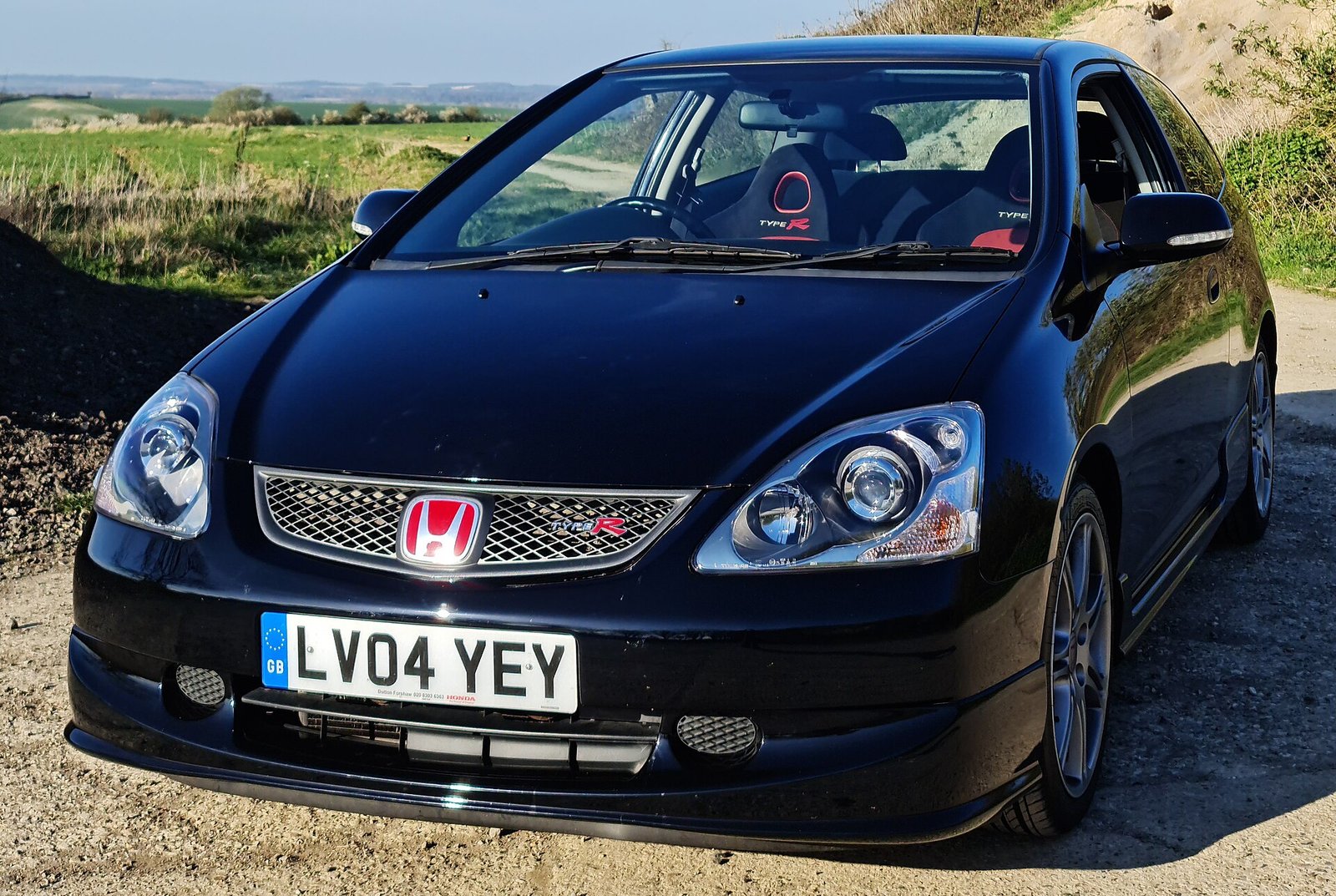
The second-generation Civic Type R arrived in 2001, built exclusively at Honda’s Swindon plant in Wiltshire. And here’s the detail that still surprises people: every EP3 Type R was built there — including the Japanese-market cars, which were assembled in Swindon and shipped 6,000 miles to Japan. A British-built hot hatch exported to the home of VTEC. Wiltshire’s greatest automotive flex.
UK and European cars got the K20A2 engine: a 2.0-litre, all-alloy four with Honda’s i-VTEC system, producing 197bhp at 7,400rpm and 145lb ft at 5,900rpm. Peak everything lives high in the rev range — below roughly 6,000rpm it’s merely brisk, then the aggressive cam lobes take over and it charges to the red. Drive it lazily and you’ll wonder what the fuss is about; that’s rather the point.
The rest of the recipe: a close-ratio six-speed manual with its alloy gearknob mounted high on the dash (one of the best shifts ever fitted to a front-driver), a fully independent rear end, and a kerb weight of 1,204kg. Honda claimed 0–62mph in 6.6 seconds and 146mph. The upright breadvan body earned it the obvious nickname, and gave it more usable space than any of its rivals.
What it’s like to drive — the honest version
The engine is the star, and nobody has ever seriously argued otherwise. The gearchange is a delight, the brakes are strong, and the chassis is more playful than the spec sheet suggests — lift mid-corner and the rear end joins in willingly.
The steering is the asterisk. The EP3 used electric power assistance, and period road testers were consistent: evo called it “overly vague around the straight ahead”, and the flat-angled wheel and high driving position drew similar grumbles. Honda recalibrated the assistance and quickened the rack for the facelift, which helped without fully fixing it. It’s the one area where a Clio 182 or DC2 Integra simply feels better. You adjust, and the engine buys a lot of forgiveness — but drive one before you buy, and don’t let a seller tell you “they’re all like that” about a rack that pulls to one side. That one’s a fault, not a characteristic (more below).
Which EP3 to buy
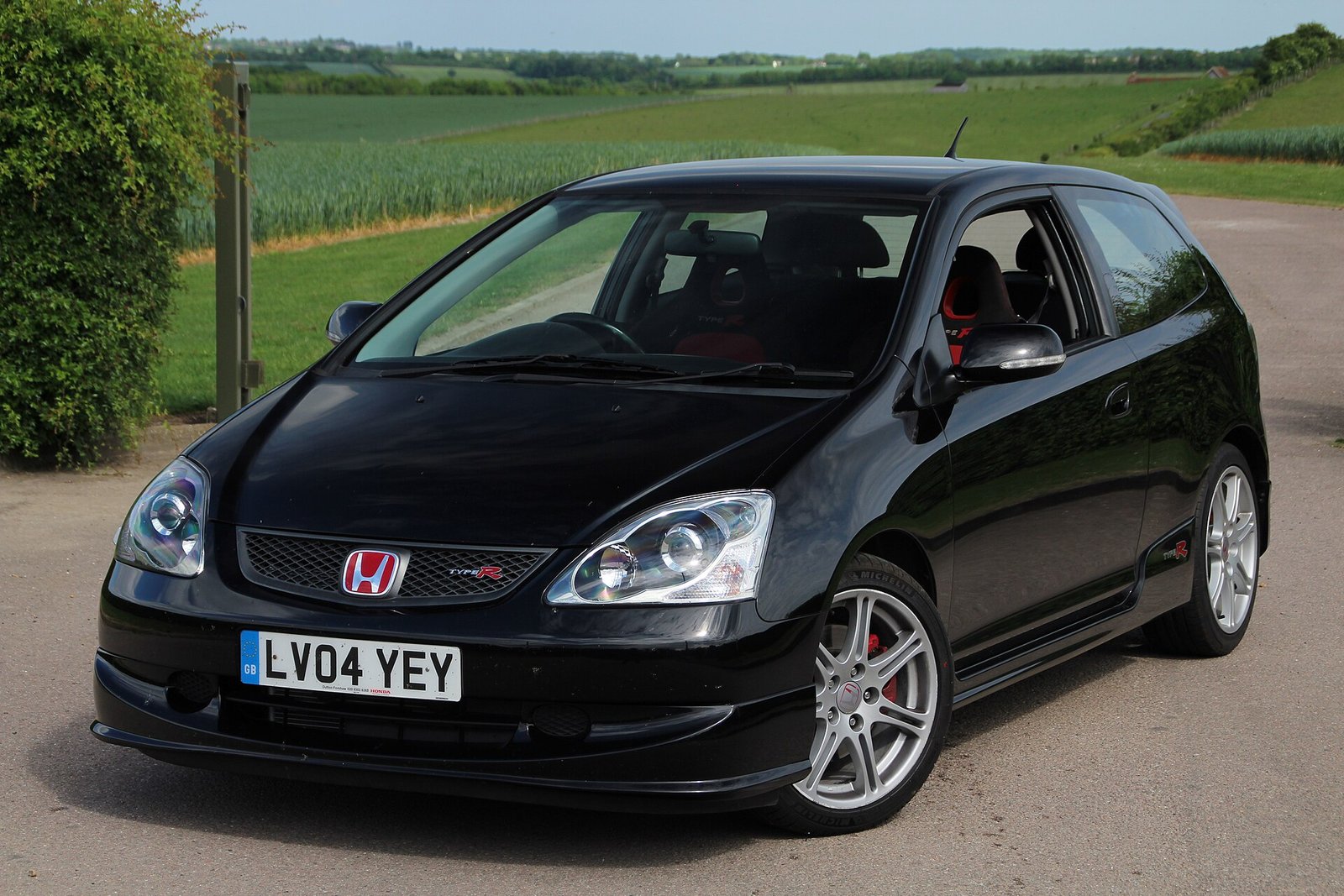
Production ran from late 2001 to 2005, with one significant update in September 2003 for the 2004 model year. Facelift cars get projector headlights, a revised front bumper, recalibrated (quicker) power steering, retuned suspension aimed at trimming understeer, and a lighter clutch and flywheel on European cars. They’re the more resolved drive, and the ones most buyers should target — with one rust-related caveat covered below.
| Version | Years | What you need to know |
|---|---|---|
| Pre-facelift UK/EDM | 2001–2003 | 197bhp K20A2, no LSD. Cheapest way in; weaker steering racks are a known issue on early cars |
| Facelift UK/EDM | 2004–2005 | Projector lights, quicker steering, revised suspension, lighter flywheel. The sweet spot |
| 30th Anniversary | 2003 | 300 UK cars (100 each in Nighthawk Black, Satin Silver, Milano Red): red Recaros, leather Momo wheel, air-con, privacy glass |
| Premier Edition | 2005 | UK run-out: Recaro Trendline seats in red/black, red carpet and door inserts, privacy glass. Mechanically standard |
| JDM (import) | 2001–2005 | K20A with 212bhp, helical LSD, red Recaros, shorter gearing, Championship White option. Swindon-built, sold in Japan |
The Premier Edition, minus the mythology
The 2005 Premier Edition was the UK run-out special, and it’s routinely mis-described in adverts. What it verifiably added: Recaro Trendline front seats trimmed in red and black, red carpet with matching door inserts, and rear privacy glass, in a choice of four colours. What it did not add: the JDM engine, a limited-slip diff, or any mechanical upgrade at all. Honda never published production figures for it either, so treat any “1 of X” claim with suspicion. It’s the most collectable UK EP3 — just make sure you’re paying a premium for what it actually is.
UK or JDM import?
This is where the EP3 story gets genuinely interesting, because the Japanese-market car was a different — and hotter — machine. Its K20A engine ran higher-compression pistons, more aggressive cams, different intake and exhaust manifolds and a fully balanced crank assembly for 212bhp; it drove through shorter gearing and, crucially, a helical limited-slip differential that UK cars never got. Inside were the red Recaro buckets British buyers spent years coveting, and Championship White was on the colour chart. All of it built in Swindon, then shipped east.
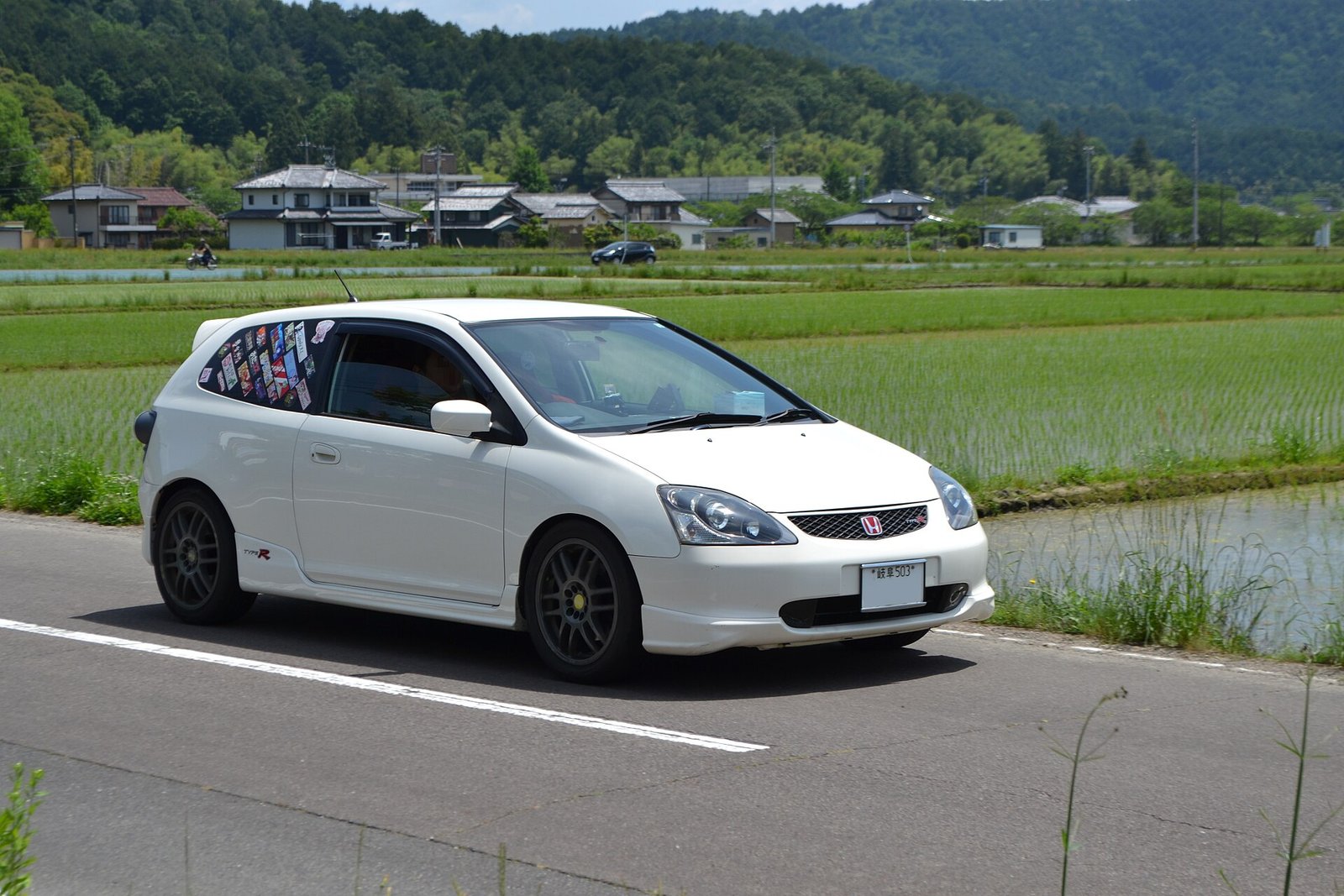
Imports have been trickling into the UK for years and command a clear premium — as of July 2026 a 26,000-mile JDM car was asking £24,985 on Car & Classic while tidy UK cars sat at £13,000–£15,000. Japanese cars typically arrive with less corrosion and, often, remarkable mileage-to-condition ratios, but you’re buying the importer’s homework: insist on auction sheets, verified mileage and proper UK registration paperwork. A UK car with a fat history file is the easier ownership proposition; the JDM car is the faster, better-specified one. Neither answer is wrong.
What to check before you buy
The EP3’s core mechanicals are genuinely tough — this is still a Honda — but twenty-plus years of British weather and enthusiastic ownership have given it a well-documented set of failure points. Every item below is corroborated across the major buying guides (evo, Fast Car) and owner experience.
Rust: rear arches and sills
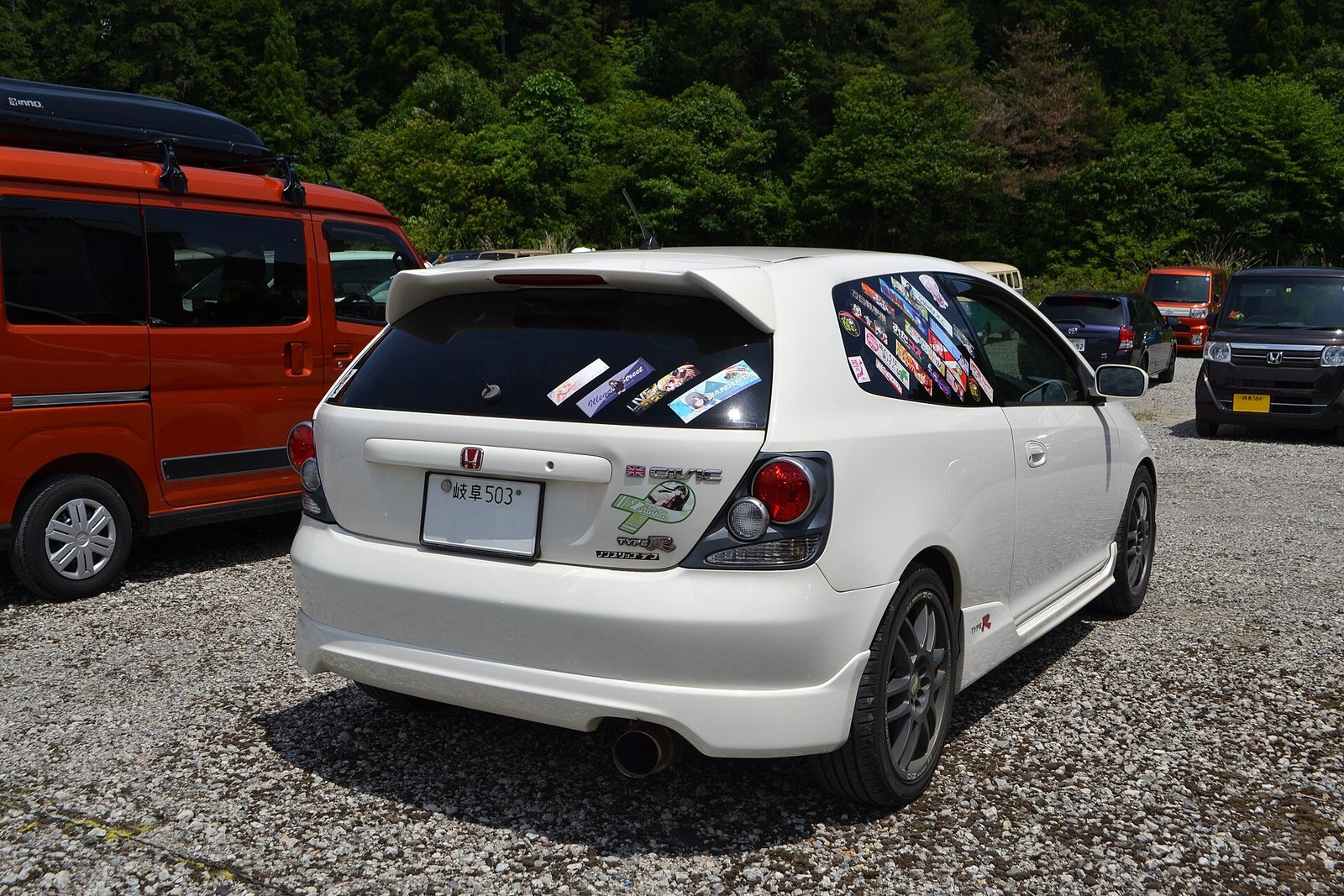
The EP3’s number-one killer. Check the rear wheelarch lips, the sills (especially where they meet the arches), and underneath with a torch. Facelift cars have a specific flaw: sound-deadening material inside the rear arches traps moisture against the metal, so they can rot from the inside out — bubbling paint on the arch lip means it’s already well advanced. Proper repair is cutting out and welding new metal, then paint; budget accordingly, because cheap cosmetic patches come straight back. A genuinely rust-free shell is worth paying over the odds for.
Gearbox: the second-gear crunch
Worn second-gear synchros are the EP3’s signature mechanical fault. The tell is a crunch or baulk going into second, worst when the box is cold. Plenty of owners live with a mild version for years; a bad one means a gearbox rebuild. On the test drive, work second gear hard from cold and be honest with yourself about what you feel. A fresh gearbox oil change can improve a marginal shift, but it won’t resurrect dead synchros. A heavy clutch pedal, separately, is the classic sign the clutch is on its way out.
Steering rack (especially pre-facelift)
Early cars are known for weak electric power steering racks. Symptoms: creaking, steering that won’t self-centre after a corner, or a persistent pull to one side. Lubrication can quieten a creak, but a genuinely worn rack means replacement — an involved and potentially expensive job, though refurbished units cost far less than new. Test for it specifically: hands lightly on the wheel out of a roundabout, and see whether the car straightens itself.
Engine and gearbox mounts
Mounts wear out, particularly on cars that have seen track use or hard launches. The symptoms are clunks on and off the throttle and a drivetrain that shunts under load. Parts are affordable; it’s a common and worthwhile refresh on any high-mileage car.
Oil, valve clearances and the timing chain
The K20 is chain-driven — no cambelt to worry about — but it does use oil when driven as intended, and it will not forgive neglect. Check the level on any viewing (a seller who doesn’t know where the dipstick is tells you plenty), and look for evidence of regular oil changes with decent 5W30. Valve clearances need periodic checking and adjustment — noisy tappets are the giveaway — and the timing chain and tensioner can stretch and rattle on higher-mileage engines, with replacement commonly advised around the 75,000–80,000-mile mark. On the drive, VTEC should engage with an unmistakable step in noise and urge around 6,000rpm; if it doesn’t, walk away.
Suspension and brakes
Original dampers are past their best on almost any survivor, and worn bushes and ball joints show up as clonks, vague responses and a car that doesn’t sit level. None of it is expensive individually, but a full refresh adds up — price it into your offer. Rear brake calipers are prone to sticking; a clean and service usually sorts them.
Interior and the rest
Driver’s seat bolster wear is near-universal — the heavily sculpted seats take a beating on every entry and exit — and retrims aren’t cheap, so factor the seat’s condition into the price. Air-conditioning condensers fail commonly: if it doesn’t blow cold, assume a condenser rather than a regas. Beyond that: rattly dash plastics (endemic, live with it), loose side skirts and door mouldings, milky headlights (restorable), and stone-chipped noses — Milano Red paint in particular fades if it’s lived outside.
Running costs and ownership
Here’s the good news: beneath the Type R badging sits a Honda Civic, and it costs Honda Civic money to run. Servicing is straightforward DIY territory or cheap at any independent — the essentials are frequent quality oil changes, the periodic valve-clearance check, and gearbox oil more often than the book says if you’re using the thing properly. Parts supply is excellent, the aftermarket is vast, and the owner community (Civinfo and friends) has documented every fault in exhaustive detail.
It’s also one of the few modern classics you can genuinely use every day — five doors’ worth of practicality in a three-door body, a big boot, and an engine that will happily commute at 2,000rpm all week then rev to 8,000 on Sunday. If you’re weighing up whether an older car can handle daily duties, we’ve written about daily-driving a classic — the EP3 is close to the ideal case. The counterpoints: it drinks noticeably when driven hard, insurance for younger drivers can sting on a car like this, and at 21–25 years old it’s still a couple of decades away from the 40-year historic tax exemption.
What EP3s are worth in July 2026
Based on what’s actually for sale and selling as of July 2026, the market splits into clear tiers. On Car & Classic at the time of writing: a 110,000-mile 2004 car at £7,750, a 62,000-mile 2003 at £13,500, a 45,641-mile 2003 at £14,995, and a 26,000-mile JDM import at £24,985. Collecting Cars has become a regular EP3 venue too, including one-owner cars with under 10,000 miles — proof the model has fully crossed into collector territory.
| Tier | Asking prices, July 2026 | What you get |
|---|---|---|
| Project / high-mileage | Under £7,000 | 100,000+ miles, rust or gearbox needs, patchy history. Buy on shell condition |
| Usable | £7,000–£10,000 | Honest drivers, some wear, ideally with the rust already sorted properly |
| Good | £12,000–£16,000 | Sub-70,000 miles, strong history, unmodified or sympathetically kept |
| Collector / JDM low-mileage | £18,000–£25,000+ | Very low miles, Premier Editions, one-owner cars, top JDM imports |
Direction of travel: upward, and our view is that has further to run. The cheap, abused cars that made the EP3 a £3,000 banger a decade ago have largely rusted away or been broken for parts, US 25-year-rule eligibility began pulling early cars across the Atlantic this year, and every generation that grew up on Gran Turismo wants one. None of that guarantees appreciation — but the supply of good, standard examples only shrinks from here.
Track the EP3 market with real data
Old Bangers tracks live listings and recorded sold prices across UK marketplaces and auction platforms. See what Hondas are on the market right now on our Honda market page, or search every live listing to compare an EP3 against its rivals before you commit.
Alternatives worth a look
Honda Integra Type R (DC2) — the sharper, rawer, older sibling with the screaming B18C and the steering feel the EP3 lacks. Now considerably more expensive, and rustier still. Renaultsport Clio 182 — the EP3’s period nemesis: lighter, sweeter to steer, French build quality, and still startling value. Ford Fiesta ST150 — half the money, two-thirds of the fun; a great first fast car, without the EP3’s top-end fireworks or its investment case.
Frequently asked questions
How much is an EP3 Type R worth in 2026?
As of July 2026, usable UK cars are advertised from around £7,000–£8,000, good sub-70,000-mile examples at £12,000–£16,000, and low-mileage, Premier Edition or JDM cars from £18,000 to £25,000-plus. Rough high-milers still surface below £7,000, but check the arches before celebrating.
Are EP3 Type Rs going up in value?
The trend over recent years has been clearly upward, with low-mileage cars now regular auction fixtures and JDM imports commanding strong premiums. From 2026 the US 25-year import rule adds overseas demand for early cars. Nothing is guaranteed, but the supply of good, unmodified examples is shrinking, which is the classic recipe for rising prices.
EP3 vs FN2 — which is better?
The FN2 that replaced it swapped the EP3’s independent rear suspension for a torsion beam, gained weight, and was no faster — and the critical consensus has always favoured the EP3 as the sharper, more playful car to drive. The FN2 counters with a more modern cabin and lower prices. For driving purity and future value, most enthusiasts pick the EP3.
Is the EP3 reliable?
Fundamentally yes — the K20 engine is one of the toughest performance units of its era when serviced properly. The caveats: it needs regular oil (and oil checks), valve clearances need periodic adjustment, second-gear synchros wear, and the body rusts. A cared-for EP3 is dependable daily transport; a neglected one will bite.
What is the Premier Edition?
The 2005 UK run-out special: Recaro Trendline seats in red and black, red carpet and door inserts, and rear privacy glass. Mechanically it’s identical to any other UK EP3 — no JDM engine, no limited-slip diff — and Honda never published how many were built, so ignore unverified rarity claims.
UK or JDM import — which should I buy?
The JDM car is the higher spec: 212bhp K20A, helical limited-slip diff, red Recaros and shorter gearing, and imports usually carry less rust. UK cars are cheaper, easier to insure and simpler to verify. Buy the JDM car for the ultimate spec; buy the best-documented UK car you can find for painless ownership.
Verdict
The EP3 is the everyman Type R: practical enough to be your only car, characterful enough to make every trip to the shops feel like qualifying, and — for now — still attainable. It demands two things of a buyer: forensic attention to the rear arches, and honesty about the gearbox. Get those right, insist on history, and you’ll own one of the great naturally aspirated hot hatches at the exact moment the world is waking up to it. The 8,000rpm everyman hero is not going to get cheaper.
Hunting for your EP3 — or weighing one against its rivals?
See every enthusiast car for sale in the UK right now, with real sold prices alongside.
Free checklist: The Classic Car Buyer’s Inspection Checklist
Print it and take it to the viewing — rust hotspots, MOT-history red flags, paperwork and the 8 walk-away signs. Enter your email and we’ll send you the PDF.