Here is the uncomfortable truth about almost every “future classics” list you have ever read: it is a wish-list. Someone picks the cars they fancy, calls them investments, and hopes you nod along. There is rarely a single number in sight that you could actually check.
This piece is built the other way round. We started with what you can observe today — real asking prices on UK marketplaces, public auction results, and old buying guides that are still online with their original “bargain” price advice attached — and worked backwards to which future classic hot hatches the evidence actually supports. Some of these cars have quietly doubled while the price guides that called them cheap are still live on the internet, contradicting themselves. That is the tell we went looking for. No crystal ball, no vibes — just the paper trail.
Quick answer: The strongest evidence-backed future classic hot hatches right now are the Renaultsport Clio 172/182 (especially the 500-off UK Trophy), Honda Civic Type R EP3, Peugeot 106 GTI/Citroën Saxo VTS, VW Lupo GTI, Fiat Panda 100HP and the Mk5 Golf GTI. The pattern is always the same: high attrition, a special version, and a generation now old enough to feel nostalgic. Cheapest genuine entry point? The Panda 100HP, with public auction sales still around £2,500 as of July 2026.
What actually turns a hot hatch into a future classic
Three forces do the heavy lifting, and you can see all three at work in the cars that have already made the jump. Understanding them is how you separate a genuine appreciating hot hatch from a car someone simply likes.
1. Attrition. Cheap fast cars get used up. They are crashed by young drivers, thrashed, modified beyond recognition, stolen, or scrapped when a £1,200 repair meets a £900 valuation. Every one that disappears makes the survivors rarer. This is the single most powerful force in the entire market, and it works hardest on the cars that were cheapest for longest — which is exactly why the best buys are often the ones nobody was precious about.
2. A special version. Limited editions, run-out specials and homologation cars appreciate first and hardest, because rarity is baked in from day one and the story writes itself. The 500-off Clio 182 Trophy is the textbook case; the base 182 follows it up the graph a few years later.
3. A cultural moment. Values move when the people who lusted after these cars as teenagers hit their forties with disposable income. The 1980s stuff has already had its moment. The late-’90s and 2000s cars are having theirs now — which is precisely why this window matters.
You do not have to take that framework on faith, because two cars have already run the full cycle in public view.
The pattern, proven: 205 GTI and Clio Williams
Hagerty’s UK buying guide for the Peugeot 205 GTI spells out the before-and-after in black and white: projects that were “£500 on eBay” not long ago, with tidy usable cars now guided at £12,000-plus and concours 1.9s around £27,000. That is not opinion — it is a specialist insurer’s published valuation tool. The Renault Clio Williams tells the same story: a £13,275 car when new in 1993, now showing a median of roughly £18,000 across tracked sales, with concours money north of £24,000.
The ones that already went
Briefly, so you know where the ceiling is. These are the hot hatches whose appreciation is done and dusted — proof of concept for everything below, but no longer a “buy before everyone notices” play.
- Peugeot 205 GTI (1984–94): the benchmark. Good usable cars from around £12,000, concours 1.9s near £27,000 (Hagerty UK, 2026). The Hot Hatchback index it anchors is up roughly a fifth since 2018.
- Renault Clio Williams (1993–95): ~12,000 built worldwide, median around £18,000 today, concours £24,000+. Gone.
- Ford Escort RS Cosworth (1992–96): a different league — good standard cars broadly £40,000–£75,000, low-mile examples well into six figures. Worth flagging honestly: the public trend data on these has actually cooled slightly of late, so this is “already appreciated,” not “still climbing.”
Notice the birth years creeping forward. The 205 was an ’80s car; the Cosworth and Williams are early ’90s. The cars in the main list below are late-’90s and 2000s — the next cohort in the queue, and the ones still wearing sensible price tags. Several are also edging towards the UK’s rolling 40-year tax-exemption line, which will eventually widen their buyer pool further (we explain that mechanism in our guide to when a car becomes tax-exempt in the UK).
The future classics, ranked on evidence
Ten cars, chosen because the observable data — asking prices, auction results, survival rates and their own out-of-date “bargain” guides — makes the case. For each: verified specs, the future-classic argument (clearly labelled as our judgement), what the market is actually doing as of July 2026, and what kills them. Prices are for driveable-to-good cars unless stated; concours outliers are noted as outliers.
| Car | Years (UK) | Observed price, good cars (Jul 2026) | Direction (our read) |
|---|---|---|---|
| Renaultsport Clio 172 / 182 | 2000–06 | £3,000–£6,000 | Rising — bottomed out |
| Clio 182 Trophy (500 UK) | 2005 | £8,000–£15,000 | Rising, clearly |
| Honda Civic Type R EP3 | 2001–05 | £5,000–£10,000 | Rising |
| Peugeot 106 GTI / Citroën Saxo VTS | 1996–2003 | £3,000–£6,000 (best, more) | Rising — attrition-driven |
| Fiat Panda 100HP | 2006–10 | £2,500–£4,000 | Bottomed, firming |
| VW Lupo GTI | 2001–05 | £3,500–£7,500 | Rising — very thin supply |
| Ford Fiesta ST150 | 2005–08 | £3,000–£7,000 | Bottomed out |
| Ford Focus ST170 | 2002–04 | £3,000–£7,000 | Cheap, early days |
| Suzuki Swift Sport (ZC31S) | 2006–11 | ~£2,500–£5,000 (indicative) | Undervalued, watch |
| VW Golf GTI Mk5 | 2005–09 | £5,000–£9,000 | Bottomed, firming |
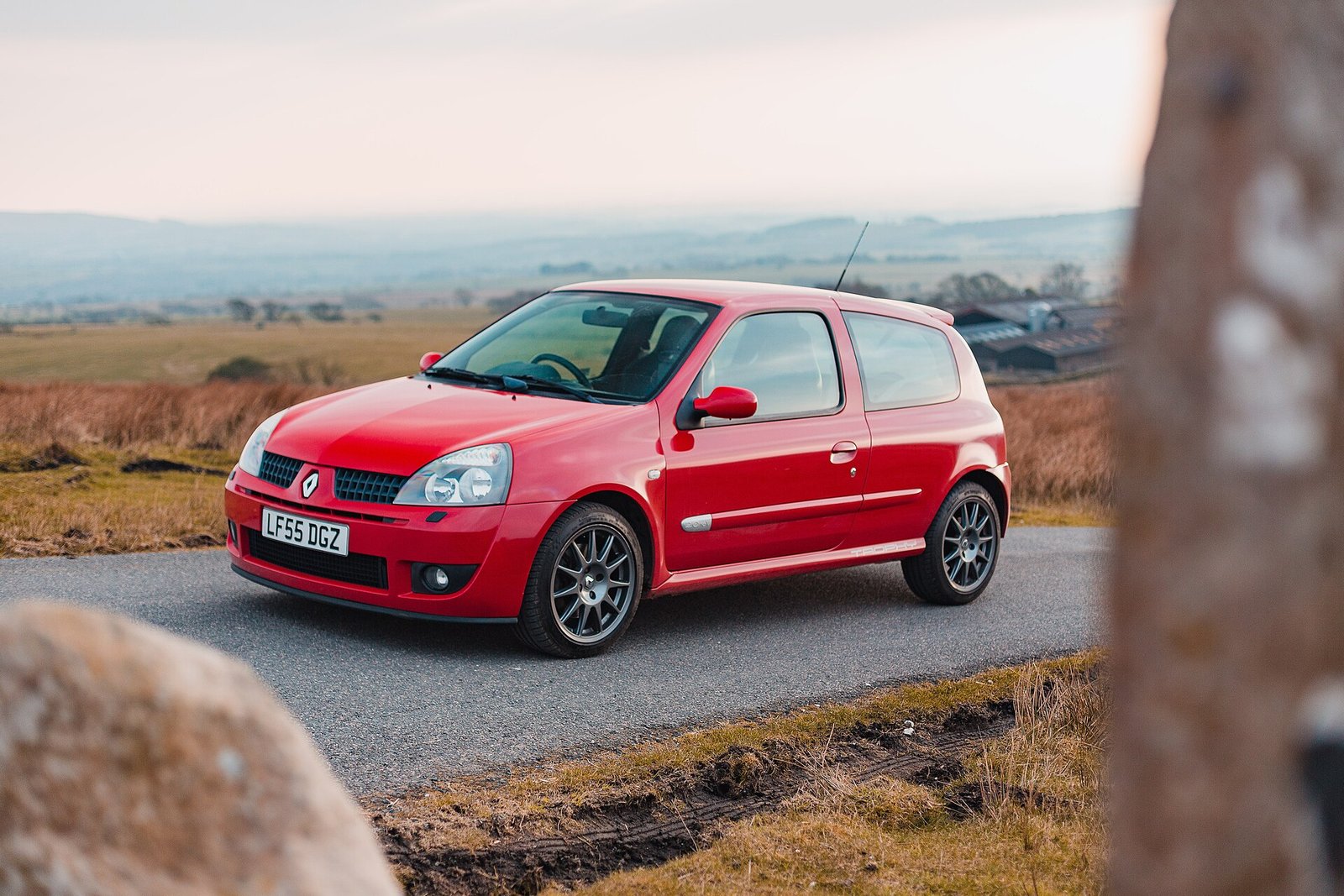
1. Renaultsport Clio 172 / 182 (and the 182 Trophy)
Specs: 2.0-litre 16v (Renault’s F4R), 172 or 182 PS depending on year — that is 170 and 180 bhp in old money. The 172 ran from around 2000, the 182 arrived for 2004–05, and the run-out 182 Trophy (2005) was capped at 500 UK cars and fitted with unique Sachs Race Engineering remote-reservoir front dampers. All three are confirmed across Wikipedia, Octane and PistonHeads buying guides.
The future-classic case (our judgement): this is the strongest evidence trail in the whole feature, and it is self-documenting. Evo’s own 182 buying guide is still online, headlined as “the last of the old-school hot hatches for under £3,000,” quoting cars “as little as £2,500.” That was true when they wrote it. It is not true now — the Trophy in particular has plainly left that world behind. When a respected magazine’s own bargain guide has been overtaken by the market it described, you are watching appreciation happen in real time.
What the market is doing: tidy 172s and 182s now sit around £3,000–£6,000, with genuinely minty examples pushing well beyond. The Trophy is the standout — The Classic Valuer tracks a median near £9,750 across 55 sales, and good driveable cars trade £8,000–£15,000 (a 2022 auction result near £48,000 exists but is a low-mileage freak, not a benchmark). Compare that with Classic & Sports Car’s 2019 guide, which pegged the average Trophy at £6,000. Up it goes.
What kills them: the cambelt-and-dephaser-pulley service is critical and not cheap (budget £500–£800); the twin-exit exhaust rusts enthusiastically; check for rear-arch and sill corrosion, tired gearbox mounts, and — on the Trophy specifically — Sachs dampers that eventually need rebuilding. Standard vs modified: for these, originality is now worth real money. A standard, unmapped car with history beats a fast-road-tuned one at resale, and a genuine unmolested Trophy is the one to hold.
2. Honda Civic Type R EP3
Specs: 2.0-litre K20A2 i-VTEC, 200 PS (197 bhp) in UK trim, revving to 8,000rpm. Sold here 2001–2005. Note the JDM cars ran the K20A with 215 PS and a helical limited-slip diff the standard UK car did without — a distinction worth knowing before you pay import money.
The future-classic case (our judgement): the naturally-aspirated, high-revving Honda formula is finished — nobody builds a screaming 8,000rpm hatch any more, and that makes the EP3 a period piece with a cult following. It sits squarely in the same appreciating pool as the JDM icons; if you are shopping this world generally, our best JDM cars under £10k round-up is the natural companion read. We have written a dedicated full EP3 buying guide if you want the deep dive.
What the market is doing: the rough end starts around £4,000, but the meat of the good-usable market is £6,000–£10,000, with concours cars nudging £20,000 (PistonHeads, 2026). We are being deliberately careful here: we could not find a cleanly dated old “from £X” guide for the EP3, so we are not going to invent a then-vs-now figure. The current spread stands on its own.
What kills them: second-gear synchro wear (feel for a cold crunch), timing-chain and tensioner issues at higher miles, and rust in the rear arches and sills. Standard vs modified: these attract heavy modification; a clean, standard, full-history car is increasingly the prize.
3. Peugeot 106 GTI & Citroën Saxo VTS
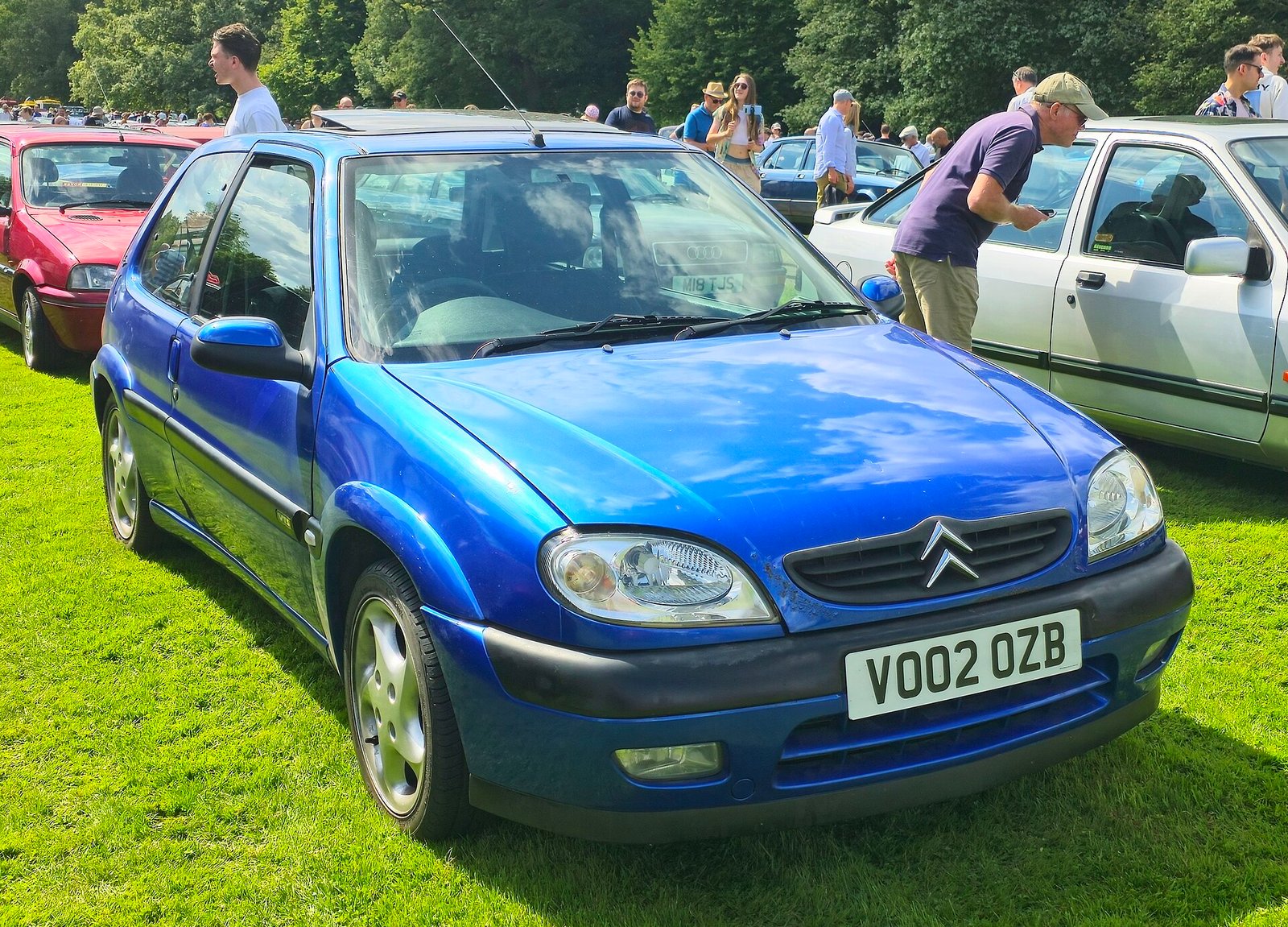
Specs: mechanical twins under the skin — the same PSA 1.6-litre 16v (TU5) engine, around 120 PS (roughly 118 bhp), in a sub-950kg shell. The Saxo VTS ran 1997–2003, the 106 GTI from 1996 to 2003.
The future-classic case (our judgement): this is the purest attrition play on the list. These were the definitive cheap-insurance boy-racer cars of the early 2000s, which means they were modified, crashed and scrapped at an industrial rate. Finding a standard, unwelded, un-boy-raced example is now genuinely hard — and difficulty is what pushes prices. Honest John explicitly notes Saxo VTS values “starting to sneak upwards.”
What the market is doing: honest caveat first — live UK stock is thin and marketplace prices are hard to pin precisely, so treat this as indicative. Autocar’s guide bands clean cars at £2,000–£3,000 and low-mile/track-ready ones at £3,000–£6,000; we have seen exceptional low-mileage cars advertised close to £10,000. For the 106 GTI, the only genuinely live UK adverts we could confirm were top-end cars (£12,500 and £17,500 for exceptional low-mile examples), which tells you where the ceiling is heading even if the middle of the market is quieter. The historical anchor is solid: Evo’s January 2019 “cheap first cars” feature listed the Saxo VTS at “as little as £1,500.”
What kills them: rust, comprehensively — under the ECU and fusebox in the front wings, rear arches, and the rear beam and its bearings (a Saxo/106 speciality; listen for reverse crunch and check the beam). Add cam-cover oil leaks (there is no gasket) and head-gasket failure. Standard vs modified: standard is the entire point here. A modified one is just another modified one; a factory-standard survivor is the appreciating asset.
4. Fiat Panda 100HP
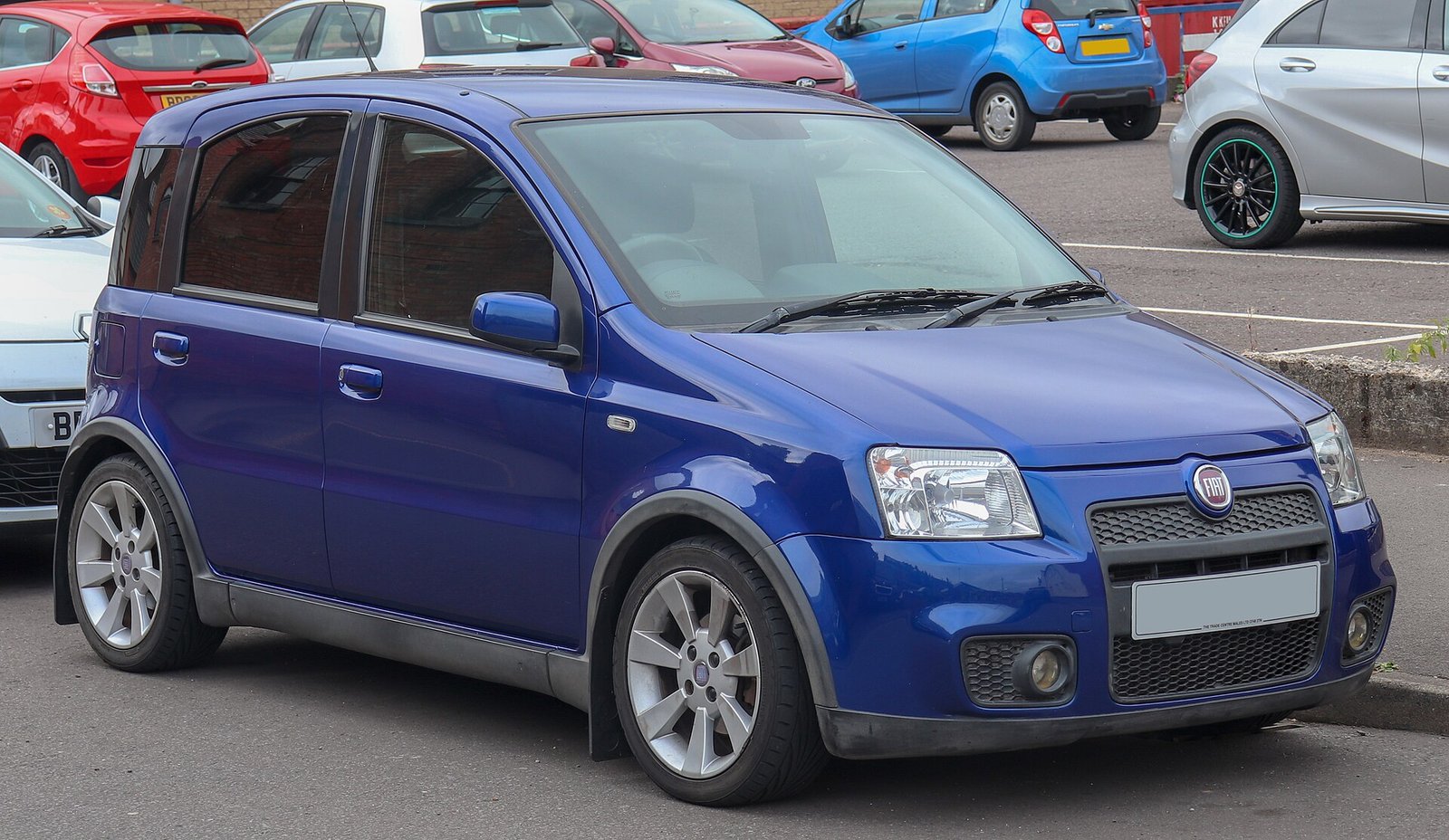
Specs: 1.4-litre 16v (Fiat’s 169A3 FIRE), 100bhp — the “100HP” is the name — with a proper six-speed manual and stiffened chassis. UK sales 2006–2010.
The future-classic case (our judgement): it is daft, characterful, tiny and increasingly beloved by people who value cheek over horsepower — the kind of car that gets rediscovered. Crucially it is the cheapest genuine entry point here, which is the best place to be if you want upside. It launched at £9,995; it can be had now for a quarter of that.
What the market is doing: The Classic Valuer’s tracked sales run £1,505 to £5,550 with a median of £2,655 — so good cars are £2,500–£4,000, the very best around £5,500. PistonHeads’ 2018 buying guide had them “from £2,000,” and Evo the same era called it “a driver’s supermini for under £3,000.” The floor has firmed since; this is a car that has stopped falling.
What kills them: the rear shock absorbers leak thanks to rust along a welded seam, and the bump-stops fail; watch for head-gasket trouble on neglected cars, electric power-steering failures, and water ingress in the footwells. Mechanically simple otherwise. Standard vs modified: few were modified, which helps — buy the tidiest, most standard one you can find.
5. Volkswagen Lupo GTI
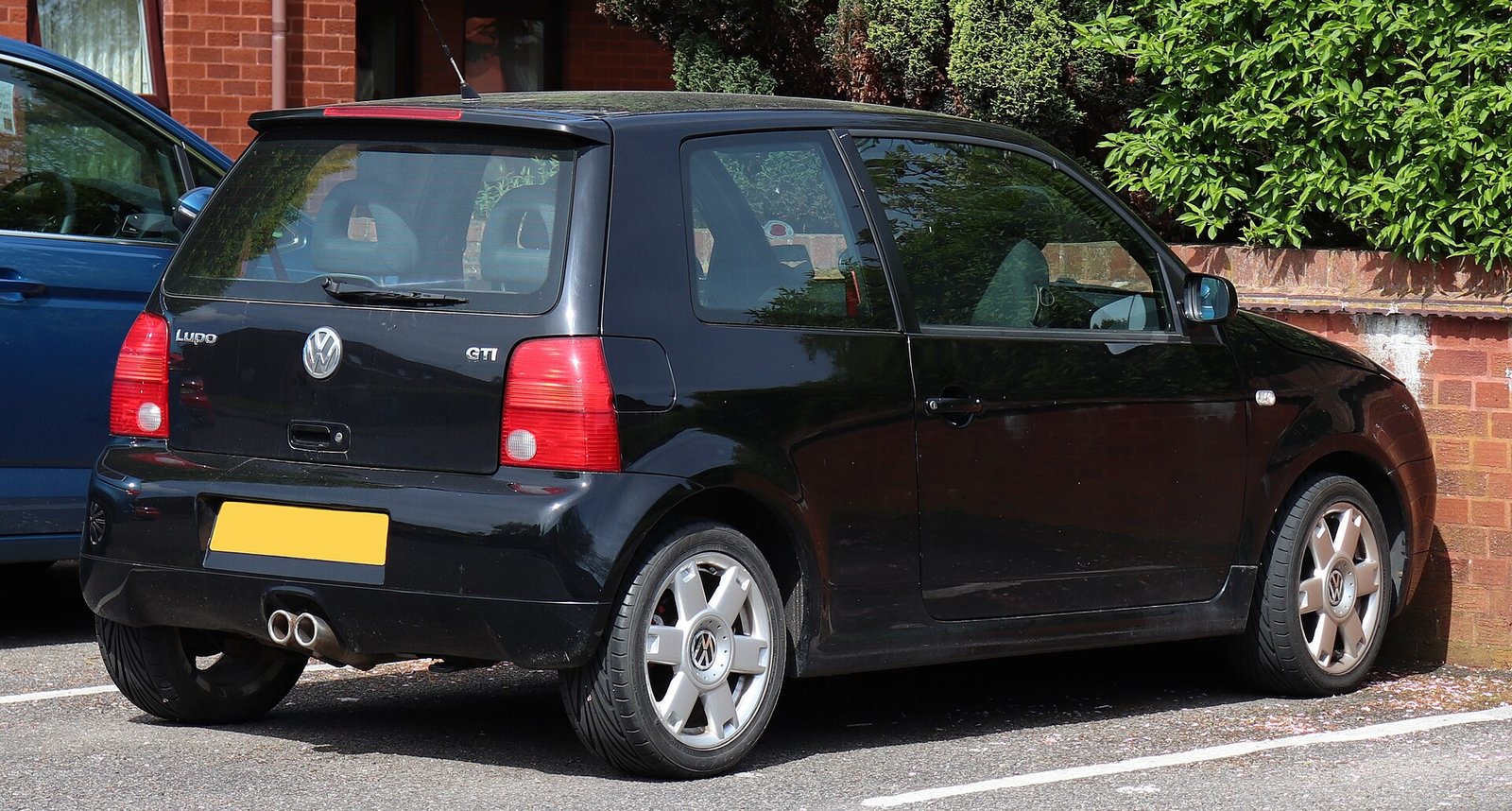
Specs: 1.6-litre 16v (engine code AVY), 125 PS, naturally aspirated, with a six-speed manual from 2002. UK sales roughly 2001–2005. Two things make it special: Evo reports just ~950 were sold in the UK (single-source, so treat as “reportedly”), and the bonnet, front wings and doors are aluminium — confirmed by both Evo and Autocar.
The future-classic case (our judgement): rarity plus the GTI badge plus VW build quality on a car this small is a potent combination. Fewer than a thousand ever here, and a good chunk since lost, makes this the scarcest car on the list by some margin — and scarcity, as the 205 taught us, is the engine of appreciation.
What the market is doing: The Classic Valuer shows a median around £6,200 (range £2,860–£11,095); good cars are £3,500–£7,500, immaculate six-speeds beyond. It launched at £12,995 in 2001. We are not going to quote a false “was £X in year Y” figure — unlike the Clio, the Lupo’s low water-mark was never cleanly date-stamped in a guide we trust, so we will simply say clean examples have got noticeably harder to find under £4,000.
What kills them: oil-burning from worn piston rings and valve-stem seals at 110k+, rust on the roof gutters, lower front-wing edges and battery tray, and paint bubbling around the rear spoiler. The aluminium panels are lovely until you need to repair one — specialist money. Standard vs modified: standard, every time; rarity only pays if the car is honest.
6. Ford Fiesta ST150
Specs: 2.0-litre Duratec, 150 PS (148 bhp), the Mk6 Fiesta’s warm-hatch high point. UK sales October 2004 to August 2008, with a little over 16,500 sold here. Do not confuse it with the later turbocharged EcoBoost ST — this is the older, naturally-aspirated one.
The future-classic case (our judgement): Ford’s fast Fiestas have a rock-solid appreciation record (see: every fast Escort and the Mk1/Mk2 XR2), and the ST150 is the affordable, analogue one before turbos took over. Cheap, chuckable, and starting to be appreciated as the honest last-of-a-type it is.
What the market is doing: the strongest then-vs-now evidence on this whole list belongs here. Autocar’s buying guide, dated October 2020, opened with ST150s “from just £1,000.” Six years on, the floor is comfortably three to four times that: good cars are £3,000–£7,000, and a collector-grade 9,000-miler was advertised near £13,000 back in 2021. We flag that our live-price read is indicative rather than a clean sweep, but the direction is not in doubt.
What kills them: notable oil consumption (around a litre per 1,000 miles is normal; more risks bottom-end knock), rear-arch and sill rust, a power-steering pump that cooks its own fluid, and thin, corrosion-prone rear brake pipes. Standard vs modified: standard with service history; oil-burners masquerade as bargains.
7. Ford Focus ST170
Specs: 2.0-litre Duratec-derived unit developed with Cosworth input, around 170–173 PS, sold roughly 2002–2004. The subtle, six-speed, Recaro-trimmed enthusiast’s Focus before the five-cylinder ST came along.
The future-classic case (our judgement): this is the earliest-days, most speculative pick here, and we will say so plainly. But the logic holds: it is a rare-ish, Cosworth-touched, sweet-handling fast Ford that is currently cheaper than the Fiesta ST150 despite being older and more special. When the ceiling is that low and the badge that good, the downside is limited.
What the market is doing: Car & Classic listings sit around £3,000–£7,995 (a single marketplace, so treat as indicative). The historical anchor is striking though: Evo’s own ST170 values page, from around 2018, listed a project at £500, an average car at £800, good at £1,500 and excellent at just £2,000. You now pay the old “excellent” money for a rough one. That is the whole thesis in one data point.
What kills them: we are being scrupulous here — the widely-repeated ST170 fault list (rear-arch and subframe rust, coil-pack failure, second-gear synchro, idle-control gremlins) circulates mainly on owner forums rather than in a top-tier printed guide, so verify any specific car against a proper inspection rather than our word. Standard vs modified: standard, unwelded, with the Recaros intact.
8. Suzuki Swift Sport (ZC31S)
Specs: 1.6-litre M16A 16v, 125 PS (123 bhp), timing-chain (not belt) engine, sold in the UK from around 2006 to 2011. The first-generation Swift Sport — light, revvy and genuinely well-built.
The future-classic case (our judgement): the enthusiast press has spent fifteen years telling everyone the Swift Sport is a modern classic in waiting, yet prices have stayed stubbornly sensible — which to us reads as undervalued rather than unwanted. Reliable, cheap to run, and increasingly recognised; a watch-this-space pick rather than a proven riser.
What the market is doing: honesty demands a flag here — we could not extract reliable live ZC31S-specific figures from the JavaScript-heavy marketplaces, and the tidy old “from £X” guides we found were for the later ZC32S, not this car. Our indicative read is roughly £2,500–£5,000 for good examples, but treat that as a starting point for your own AutoTrader and eBay search, not gospel.
What kills them: rust in the rear subframe, torsion beam and underbody (owner-club sourced, so inspect underneath carefully), a weak handbrake cable, gearbox reluctance into second and third if neglected, and famously thin paint that stone-chips. Standard vs modified: standard, and check the underside more carefully than the paint.
9. Volkswagen Golf GTI Mk5
Specs: 2.0-litre turbo FSI, 200 PS (197 bhp), 2005–2009. The car that got the GTI badge back on song after the wilderness years of the Mk3 and Mk4 — the one the motoring press collectively exhaled over.
The future-classic case (our judgement): this is the “return to form” GTI, and return-to-form cars have a strong nostalgic pull. It is depreciated to the bottom of its curve, drives brilliantly, and is now cheap enough that clean ones are being bought to keep rather than thrash. The Edition 30 and Pirelli specials (230 PS) are the ones that will lead any climb.
What the market is doing: PistonHeads’ Mk5 guide from June 2015 listed cars “from £4,000” for high-milers against a £19,995 launch price. Eleven years on, good cars are £5,000–£9,000 and the very best more — a market that has flattened out at the bottom and begun, gently, to firm. The related Mk4 GTI 25th Anniversary (1.8T 180, roughly 1,800 UK cars) is a genuine limited-edition alternative already showing £9,000–£16,000 for good petrol examples.
What kills them: the big one is the cam follower that drives the high-pressure fuel pump — check it has been monitored or replaced, because failure is expensive. Then DSG Mechatronic failure on auto cars (around £900), diverter valves, coil packs, and the cambelt-and-waterpump job at 80k. Standard vs modified: these map easily and many have; a standard, cam-follower-documented car with the specials’ provenance intact is the keeper.
See the evidence for yourself
Old Bangers aggregates live listings and public auction results for exactly these cars — pulling from eBay UK, AutoTrader, Car & Classic and Collecting Cars into one place, so you can watch a model’s real market rather than trust a hunch. The feed is genuinely live: as this went to press it held, among others, an early Golf GTI advertised at £6,996 and a Citroën Saxo at £2,500 — a snapshot that shifts by the day.
Browse the marques on this list: Renault · Ford · Honda · Peugeot · Citroën · Volkswagen · Fiat — or search every live listing.
The honest bit: cars are not pensions
Everything above is evidence-based, but here is where we stop pretending to be financial advisers — this next part is opinion, plainly labelled.
A car is a terrible investment and a wonderful thing to own. It costs money every year you keep it: insurance, tax, maintenance, storage, the head-gasket that goes the week after you buy it. Appreciation, if it comes, has to clear all of that before you have made a penny — and it might not come at all. Trends reverse; the Escort Cosworth data cooling off is a live reminder that even blue-chip hot hatches do not rise in a straight line.
So buy one because you want to drive it, keep it standard, keep it rust-free, keep the receipts, and treat any appreciation as a bonus rather than a plan. The cars that make money are almost always the ones bought by people who would have kept them anyway. If you want the fuller version of that argument, our piece on daily-driving a classic car makes the case for use over speculation, and our best classic cars under £5,000 round-up covers the wider bargain end.
Frequently asked questions
What makes a hot hatch a future classic?
Three things, in our experience: high attrition (most were crashed, modified or scrapped, so survivors are scarce), a special or limited version that carries the badge, and a generation reaching the age where the people who wanted them new can now afford them. The Peugeot 205 GTI and Clio Williams ran that exact cycle in public — their published values went from a few hundred pounds to five figures — and the late-’90s and 2000s cars are next in the queue.
Are hot hatches a good investment?
Honestly? As a financial plan, no — and this is opinion, not advice. Running costs, maintenance and the occasional big bill eat any paper gains, and values can fall as well as rise. The cars that have appreciated were mostly bought by enthusiasts who would have kept them regardless. Buy one to enjoy, keep it standard and rust-free, and treat appreciation as a bonus.
Which 90s and 2000s hot hatches are appreciating?
On the evidence we can observe, the clearest risers are the Renaultsport Clio 172/182 and especially the 500-off Trophy, the Honda Civic Type R EP3, the Peugeot 106 GTI and Citroën Saxo VTS (attrition-driven), and the rare VW Lupo GTI. Each shows either published price guides that the market has since overtaken, or a firm, rising floor on public auction results.
What’s the cheapest future classic hot hatch right now?
The Fiat Panda 100HP. Public auction sales tracked by The Classic Valuer run to a median around £2,655, with good cars £2,500–£4,000 as of July 2026 — against a £9,995 price when new. The Ford Focus ST170 is a close second and arguably more special, though its market is thinner. Both have clearly stopped falling.
Should I buy standard or modified?
Standard, almost without exception. Modifications rarely add resale value and often subtract it, and on cars like the Saxo VTS or Clio 172 a factory-original survivor is the entire appreciation story — the modified ones are ten-a-penny. An unmolested car with full history will out-sell a faster, tuned example every time, and it is far easier to insure and MOT.
The verdict
The future classic hot hatches worth your money are not a mystery, and they are not a matter of taste. They are the cars where the evidence already points one way: where the survivors are scarce because attrition did its work, where a special edition anchors the range, and where a magazine’s own bargain guide now reads like a historical document. The Clio Trophy, the EP3, the Saxo VTS, the Lupo GTI, the little Panda 100HP — these are the ones the paper trail supports, while they are still attainable.
Buy the best, most standard, least-rusty example you can find, drive it as intended, and keep the receipts. Do that and the worst case is you owned a brilliant car for a few years. The best case is that everyone else notices what the evidence already shows — after you have bought.
Ready to buy before everyone else notices?
See every one of these hot hatches for sale right now — with real asking prices and public auction results side by side.
Free download: The 2026 Future Classics Watchlist
20 modern classics tipped to rise — with indicative prices and exactly what to check on each. Enter your email for the PDF.