Somewhere in the last decade, the internet decided that every Japanese performance car of the 1990s and 2000s was a blue-chip collectable. Skylines went to the moon. Supras followed. Even the humble Integra Type R now trades for the price of a decent new hatchback. If you spent your formative years playing Gran Turismo on a CRT telly, the message seems clear: you missed the boat.
Except you didn’t. Strip away the poster heroes and Japan’s golden age left behind a deep bench of brilliant, characterful, rev-hungry machinery that you can still buy in Britain for less than the cost of a two-year-old Dacia. Rear-drive straight-sixes. Mid-engined roadsters. A 9,000rpm rotary coupe for the price of a decent e-bike. We went looking at what’s genuinely for sale in the UK right now — real cars, real asking prices — and came back grinning.
This is the sub-£10,000 JDM shopping list we’d actually use, with the honest bits left in: what each car is, why it’s great, what breaks, and what they’re really advertised for as of July 2026.
Quick answer: The best cheap JDM and Japanese performance cars in the UK under £10,000 right now are the Mazda MX-5 (NB/NC), Toyota MR2 Roadster, Nissan 350Z, Honda Civic Type R EP3, Subaru Impreza WRX, Toyota Celica T Sport, Lexus IS200, Mitsubishi FTO — and, for the brave, the Mazda RX-8. Usable examples of all of them were advertised on UK marketplaces for under £10k in July 2026.
What actually counts as “JDM”?
Strictly, JDM means Japanese Domestic Market: a car built for sale in Japan, later shipped over here as a “grey import” — a Eunos Roadster rather than a UK MX-5, a Fairlady Z rather than a 350Z, complete with a dealer sticker from Osaka and, occasionally, a sat-nav that still thinks it’s in Nagoya. Purists will tell you, at length, that a UK-supplied Honda is not JDM. They are technically correct, which as everyone knows is the best kind of correct.
This article cheerfully covers both: genuine Japanese-market imports and the UK-supplied Japanese performance cars that share their engineering. In the real world the two live side by side in the classifieds, often with an import badge being the only meaningful difference — and sometimes a price gap worth exploiting. Where being an import genuinely changes the ownership experience (insurance, history checks, ULEZ paperwork), we’ve dealt with it in its own section further down.
Mazda MX-5 (NB & NC) — the right answer
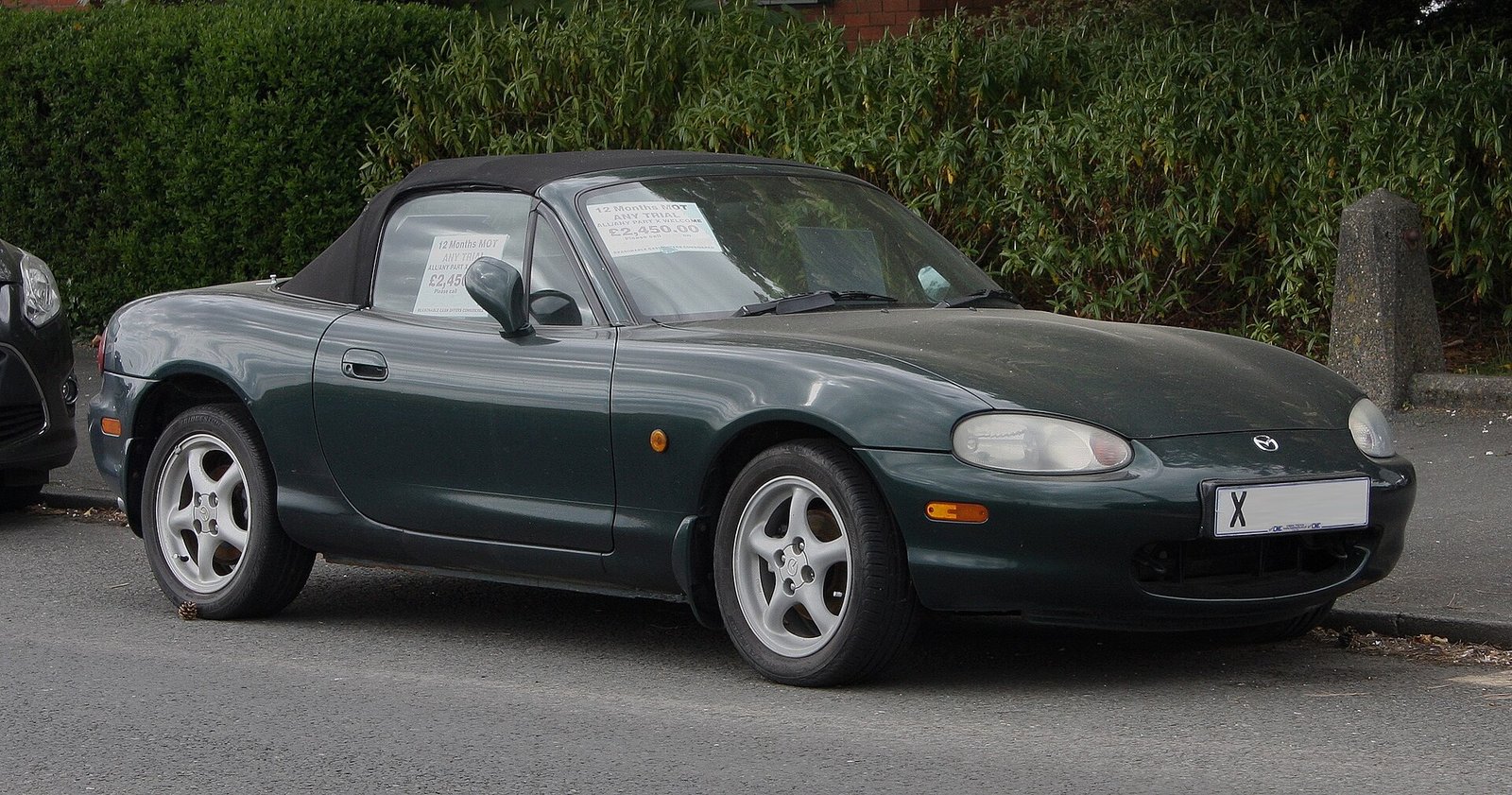
Predictable? Certainly. Wrong? Never. The Mk2 MX-5 (NB, 1998–2005) is the purist’s budget pick: a 1.6 or 1.8 twin-cam, rear drive, a gearshift like a bolt-action rifle and about a tonne to throw around. In post-2001 1.8i Sport form Mazda quoted 146PS at a giddy 7,000rpm, with a six-speed ‘box. The Mk3 (NC, 2005–2015) adds refinement, a stiffer shell and, in 2.0 Sport trim, a limited-slip diff and proper damping. And if you want actual JDM credentials, early cars imported from Japan wear the gorgeous name Eunos Roadster.
What to check: rust, rust, rust. On the NB it’s the rear sills and wheelarches, plus the double-skinned front chassis legs that corrode quietly from the inside — a shiny car can hide a scabby underside, so inspect the jacking points and floorpan. Beyond that it’s age stuff: tired dampers and bushes, seized calipers, neglected coolant. NCs rot too, just later, and cabin drain blockages soak carpets on both.
The evidence: as of July 2026 eBay UK’s classifieds were awash with them — an NB Arctic limited edition at £2,995, a 2007 NC 2.0 Sport with LSD, Bilsteins and Bose at £4,450, and a 1990 Eunos Roadster import at £3,750. Driveable cars start under £2,000; £5,000 buys a genuinely nice one.
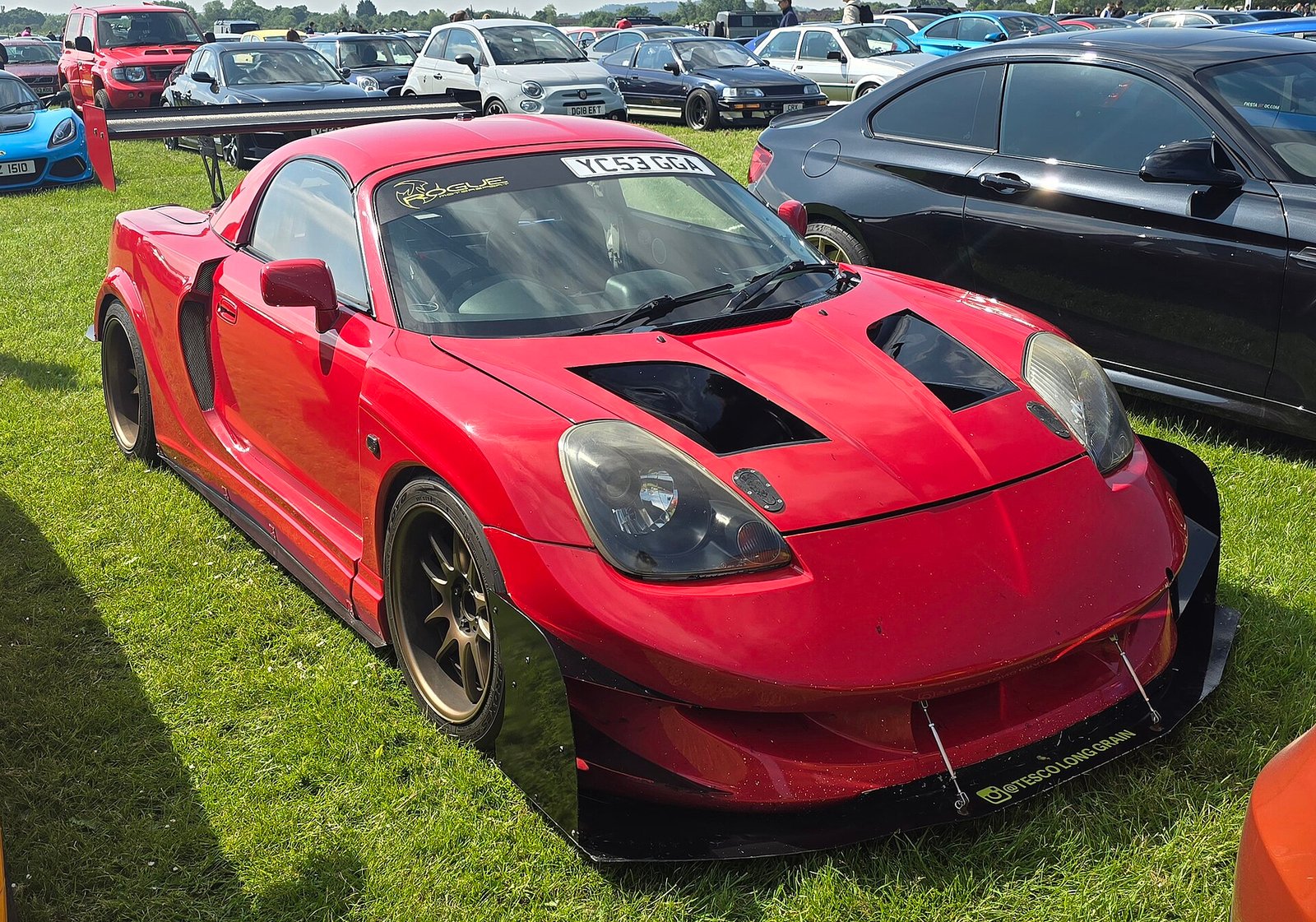
Toyota MR2 Roadster (Mk3, ZZW30) — the bargain Elise
Toyota’s third-generation MR2 ditched the Ferrari-lite styling of the SW20 for something more honest: a tiny, light, mid-engined two-seater with a 1.8-litre 1ZZ-FE four producing 138bhp. That doesn’t sound like much until you learn what it weighs and where the engine sits. Think of it as nine-tenths of a Lotus Elise experience at about one-fifth of the price, with Toyota servicing costs.
What to check: the infamous pre-cats. Early cars carry small ceramic pre-catalytic converters in the exhaust manifold; when they break up, debris can be drawn back into the engine, scoring the bores and leading to heavy oil consumption and, eventually, engine failure — the MR2 owners’ community treats pre-cat inspection or removal as job one. Watch for high oil use and down-on-power engines on the test drive. Also try the clutch and gearshift (a few cars have the clunky SMT automated manual — most buyers prefer the proper manual), and check the roof and boot drains.
The evidence: in July 2026, eBay UK showed Mk3 Roadsters from £1,795 (a 2004 car with ULEZ compliance flagged in the ad) through £4,800–£5,500 for tidy examples. Old Bangers’ own live feed also had the older generations in this money: a 1986 Mk1 (AW11) at £9,000 and a 1996 SW20 at £9,500 — proof the whole MR2 family still fits under our ceiling, just.
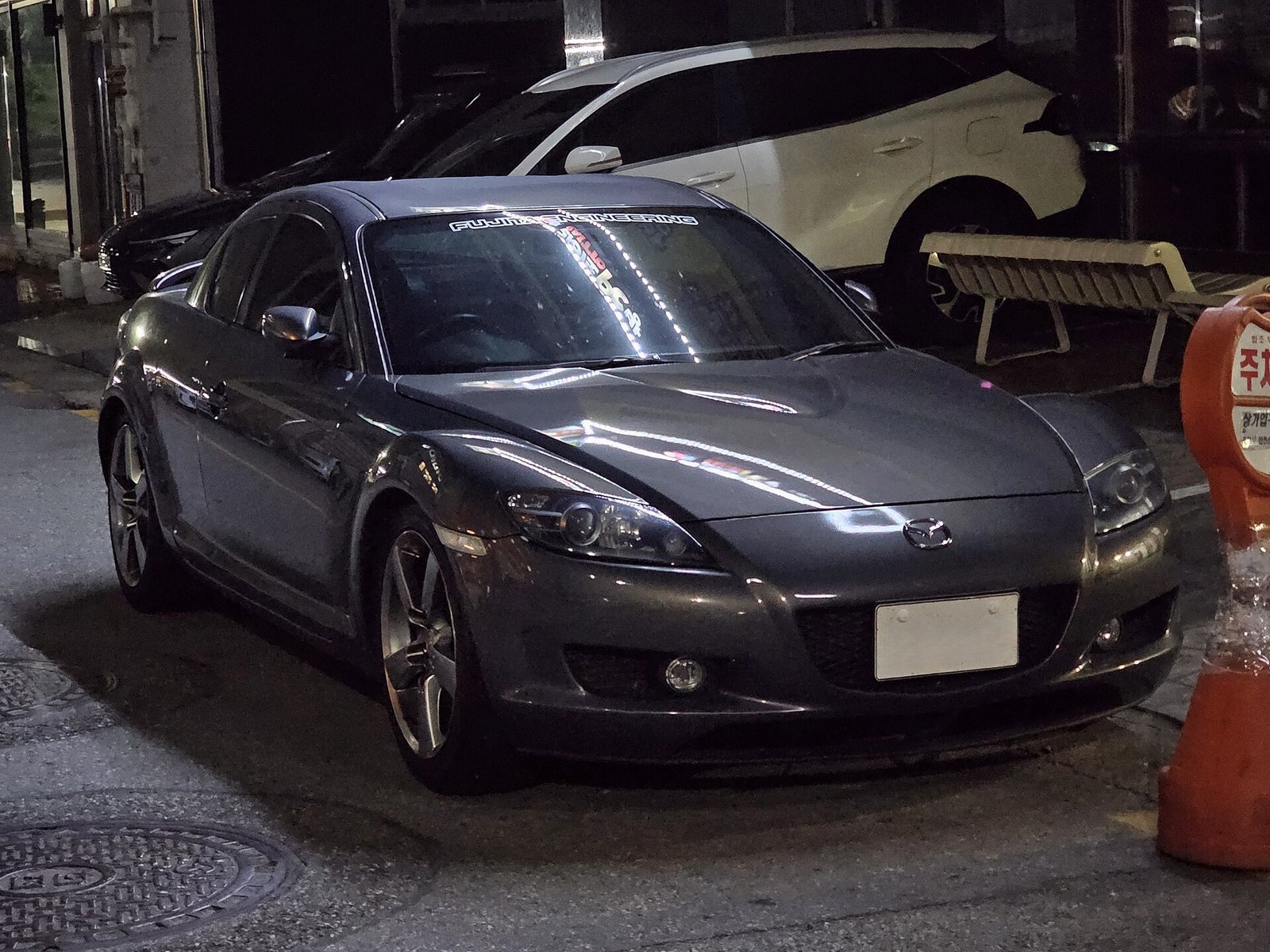
Mazda RX-8 — cheap for a reason, brilliant anyway
Here it is: the cheapest way into a genuinely exotic engine. The RX-8’s 1.3-litre RENESIS twin-rotor spins to 9,000rpm with turbine smoothness, sits low enough for sports-car handling, and comes wrapped in a four-seat coupe with backwards-opening rear doors. The catch is that the rotary demands an owner who understands it — which is precisely why they’re so cheap, and why we’d still rather have one than another grey crossover.
What to check: engine health above all. Rotaries lose compression as their apex seals wear — commonly flagged from around 60,000 miles — so a proper compression test from a rotary specialist is close to mandatory before buying; symptoms include poor hot starting and low power. Flooding is the classic party trick: shut one down cold (say, moving it off the drive) and it may refuse to restart. Ignition coils are consumables — weak coils kill seals — and budget for constant oil top-ups and a cat that can fail expensively. Buy on evidence of care, not on mileage or shine.
The evidence: July 2026 asking prices on eBay UK ran from £1,250 for a spares-or-repair 231PS car, through £2,900–£4,700 for runners with history, to £9,995 for the desirable R3. The gap between a good one and a grenade is the cost of that compression test. Roll the dice informed.
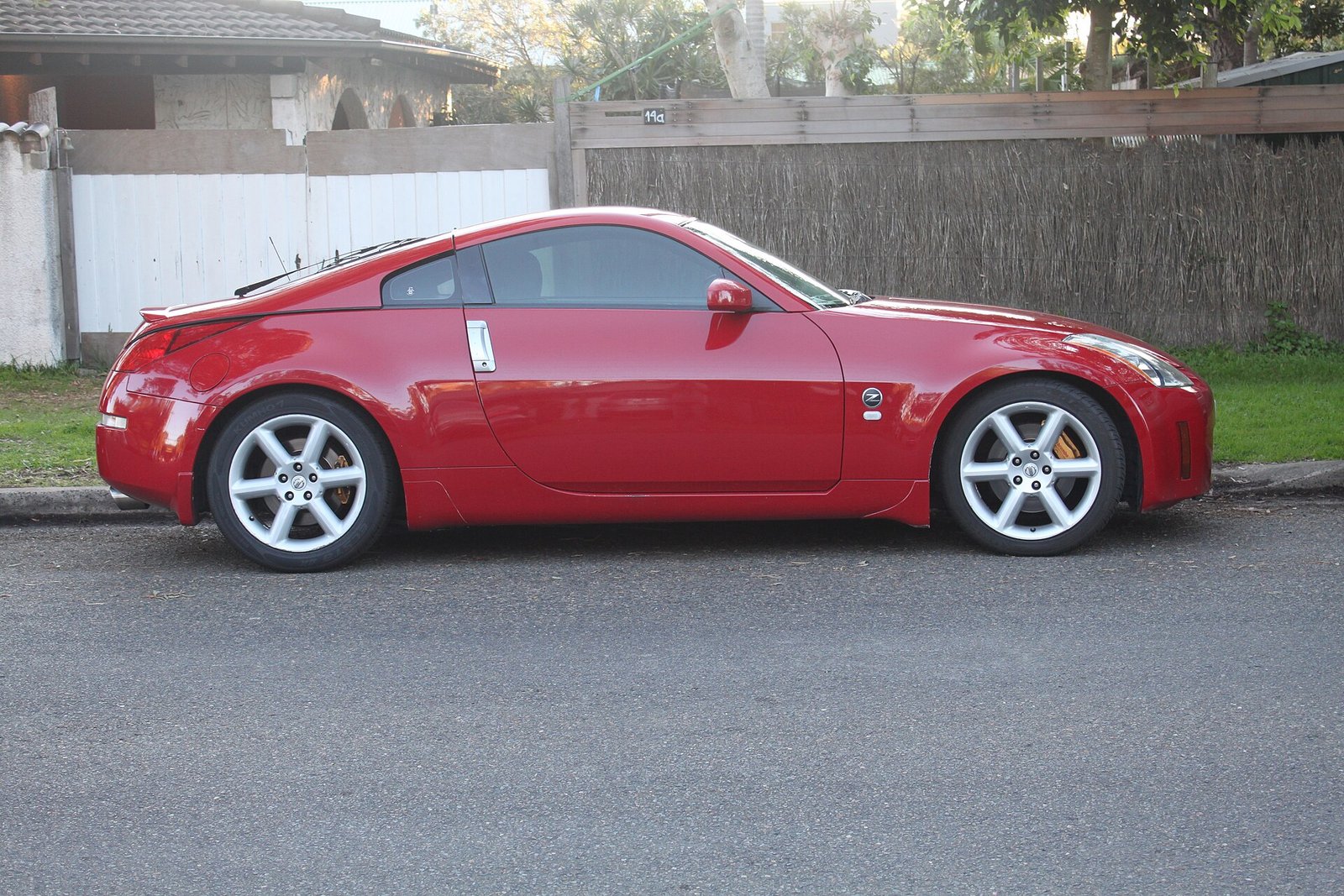
Nissan 350Z — the muscle car of the bunch
While everything else here revs for its power, the 350Z just leans on displacement: a 3.5-litre V6 up front, driving the rear wheels through a proper six-speed manual. Early cars made 276bhp; the 2005-on “Rev-up” engine took it to 296bhp, and the later HR-engined cars (from late 2006) brought a 306bhp unit that revs harder still. It’s a GT with attitude — heavy-ish, loud, hugely capable, and one of the great used-performance bargains of our time.
What to check: gearboxes suffer worn synchros and baulking, particularly on pre-2005 cars, so row it through every gear from cold. The 296bhp engine can drink oil at a startling rate — check the level religiously and walk away from any owner who doesn’t. HR cars need watching for low oil pressure from an internal gasket failure that’s around nine hours’ labour to fix. Listen too for knocks from worn suspension arm bushes, and remember clutches last roughly 40,000 miles driven enthusiastically.
The evidence: in July 2026, eBay UK had a 2006 convertible at £4,000, coupes from £4,989, a 71,000-mile Rev-up GT at £7,850 and an HR at £8,250 — with only the shiniest low-milers breaking £10k. A JDM-import Fairlady Z auto was on at £5,950, for maximum authenticity points.
Honda Civic Type R (EP3) — the 8,000rpm hatchback
The EP3 Civic Type R (2001–2005) is peak naturally-aspirated Honda: a 197bhp 2.0-litre K20 that delivers its best at 7,400rpm on the way to an 8,000rpm limiter, bolted to one of the sweetest six-speed gearboxes ever fitted to a front-driver. Built in Swindon, fettled in Japan, thrashed everywhere. It’s on the bubble of our budget — clean cars are appreciating fast — but in July 2026 it still just squeezes in.
What to check: second-gear synchro wear (listen for crunches, especially cold), noisy tappets that betray skipped valve-clearance services, and the timing chain and tensioner, which can let go between 80,000 and 160,000 miles. Feel for the VTEC step at around 6,000rpm — if it isn’t obvious, something’s wrong. Steering racks creak and pull when worn, rear arches rust on facelift cars, and track-day heroes eat engine mounts. Our full EP3 buying guide covers all of it in detail.
The evidence: July 2026 eBay UK asking prices ran from £4,600 to £8,750 for honest road cars — a 2004 facelift with leather and air-con at £5,995, a pre-facelift with low miles and owners at £8,750 — while low-mileage Premier Editions and fresh JDM imports had already escaped to £12,995–£14,995. The direction of travel is obvious; buy accordingly.
Subaru Impreza WRX (bugeye/blobeye) — rally car for the school run
The second-generation Impreza WRX (2000–2007, in “bugeye”, “blobeye” and “hawkeye” facelifts) gives you the full World Rally recipe — turbocharged EJ20 flat-four (around 215bhp in UK WRX trim), symmetrical all-wheel drive, bonnet scoop you could lose a cat in — for the price of a used Fiesta. STIs have mostly climbed out of reach; the standard WRX is the value play, and on a wet B-road it will still embarrass far more expensive machinery.
What to check: these engines live and die by oil. Ask when it was last changed and how often; oil surge under hard cornering can starve pistons, and poor cooling of the fourth cylinder is the classic route to rod knock on abused cars. The WRX’s five-speed manual is markedly weaker than the STI six-speed, so feel for crunches, and confirm gearbox and rear-diff oil changes every 30,000–50,000 miles. Rust attacks the rear arches first, then the front arches and underside — inspect on a ramp.
The evidence: in July 2026 eBay UK listed a 2002 bugeye WRX wagon at £5,600, a blobeye saloon at £6,500, and various 2.5 WRX hatches and estates from £4,490. Modified cars are everywhere; standard ones are the keepers.
Toyota Celica (T230) — the forgotten one
Nobody talks about the seventh-generation Celica (1999–2006), which is why it might be the best-value coupe in Britain. The base 1.8 VVT-i has around 140bhp in a light, sharp, front-drive shell; the one to hunt is the T Sport, whose 2ZZ-GE engine — co-developed with Yamaha, shared with the Lotus Elise 111R — makes an official 189bhp at 7,800rpm and does 0–62 in 7.4 seconds. When the variable lift switches over near the top of the rev range, it goes properly feral.
What to check: on the base 1ZZ engine, oil consumption — check the level and ask about top-up habits, as neglected cars run low and suffer. On the 2ZZ, listen for rattles from the cam-lift mechanism: the lift bolts are a known weak point (there’s a whole aftermarket for upgraded ones), and a car that won’t “lift” needs investigation. Otherwise it’s standard old-Toyota stuff: service history, suspension wear, the odd rusty arch.
The evidence: July 2026 eBay UK prices were almost comically low — driveable 1.8 VVT-i cars from £1,250, a one-owner 2006 car with full Toyota history at £1,975, and T Sports at £4,195. That’s Elise-engine thrills for banger money.
Lexus IS200 — the budget touring car
A compact rear-drive saloon with a 2.0-litre straight-six (the 1G-FE, about 153bhp), a six-speed manual and build quality that shames German rivals of the same era — the IS200 is the thinking person’s cheap JDM saloon, and the JDM version even has a better name: Toyota Altezza. It’s not fast, but it’s smooth, balanced, endlessly reliable and increasingly appreciated as a modern classic. It’ll even daily — see our guide to daily driving a classic.
What to check: front ball joints are the known weak spot — they fail regularly, so listen for knocks and check for advisories. Watch for rust in the wheelarches, sills and behind the rear bumper on older cars, seized front caliper sliding pins, and clutch judder, which owners report regardless of age. Interiors last brilliantly; electrics mostly behave, bar the era-typical CD changer sulks.
The evidence: in July 2026 eBay UK had IS200s from £2,499, a 14-stamp full-history SE at £3,999, a TRD-kitted six-speed manual at £6,499 and a 58,000-mile car at £7,995 — with only a 24,000-mile time-warp example asking five figures. Manuals carry a healthy premium over autos; buy one anyway.
Mitsubishi FTO — the wildcard import
Here’s your proper grey-import experience. The FTO — Japan’s Car of the Year in 1994 — is a pretty little front-drive coupe that barely officially reached Britain: the UK importer only relented in the car’s final year, so nearly every FTO here came over from Japan used. The one to have is the MIVEC 2.0 V6 (the 6A12), good for 197bhp and a lovely metallic snarl, ideally in GPX trim.
What to check: rust is the FTO’s number one killer — these were Japanese-market cars never designed for salted British roads, so check everything underneath. Verify you’re actually buying a MIVEC: plenty of 168bhp non-MIVEC V6s get passed off as the real thing. On any grey import, confirm the paperwork trail — SVA/IVA test history, mph speedo conversion and the other UK-registration niceties. Many FTOs are tiptronic autos; the manual is the enthusiast’s pick, if you can find one.
The evidence: July 2026 eBay UK showed a 1994 MIVEC auto with fresh MOT and £4,000 of recent spend at £4,995, and a 69,000-mile car at £5,500. Its bigger brother the GTO/3000GT hovered nearby — £2,900 for a non-turbo auto, £7,500 for a manual 4WD car — if you fancy maximum 90s excess per pound.
The shortlist at a glance
| Car | Engine | Power | Observed UK asking prices (July 2026) |
|---|---|---|---|
| Mazda MX-5 NB/NC | 1.6/1.8/2.0 four | up to 146PS (NB Sport) | £1,495–£5,000 |
| Toyota MR2 Roadster (Mk3) | 1.8 1ZZ-FE | 138bhp | £1,795–£5,500 |
| Mazda RX-8 | 1.3 RENESIS rotary | up to 231PS | £1,250 (project)–£9,995 (R3) |
| Nissan 350Z | 3.5 V6 | 276–306bhp | £4,000–£8,250 |
| Honda Civic Type R EP3 | 2.0 K20 | 197bhp | £4,600–£8,750 |
| Subaru Impreza WRX | 2.0/2.5 turbo flat-four | c. 215bhp+ | £4,490–£6,500 |
| Toyota Celica T230 | 1.8 VVT-i / T Sport 2ZZ-GE | c. 140 / 189bhp | £1,250–£4,995 |
| Lexus IS200 | 2.0 straight-six | c. 153bhp | £2,499–£7,995 |
| Mitsubishi FTO MIVEC | 2.0 V6 6A12 | 197bhp | £4,995–£5,500 |
UK car or fresh import?
Most cars in this list exist both as UK-supplied cars and as Japanese-market imports, and the right answer depends on your appetite for paperwork.
The case for an import: Japanese cars tend to be low-mileage, garaged, and unsalted — the home market is kind to cars. Anything sold through the Japanese auction system comes with an auction sheet and a grade: roughly S down to 1 for overall condition, with 4.5 meaning very good, 4 good with minor marks, 3.5 average, and R/RA flagging repaired accident damage; interiors score A to E. Import specialists suggest a 10-year-old car graded 4 with an interior of B or better is the sweet spot. Insist on seeing the original auction sheet — it’s the closest thing an import has to a history file.
The case for a UK car: continuous MOT history you can check on gov.uk in thirty seconds, service stamps in English, and no questions about what happened before the boat. A fresh import’s odometer and history rest on the auction sheet and the importer’s integrity — fine with a reputable importer, riskier from a bloke with a compound near the docks.
Insurance: imports are a specialist market. Mainstream insurers often quote high or decline because grey imports have unfamiliar specs and are frequently modified; specialist brokers understand the market and offer agreed-value policies for Japanese imports. It needn’t be expensive — limited-mileage classic policies on cars like these can be startlingly cheap — but get quotes before you buy, especially if you’re under 30.
ULEZ and clean-air zones: London’s ULEZ requires petrol cars to meet the Euro 4 NOx standard, per TfL — which most of the 2005-on cars here manage (several of the eBay ads above trumpet “ULEZ compliant” for exactly this reason). Don’t assume, though: check your exact registration on TfL’s vehicle checker before buying, and be prepared to chase TfL with emissions evidence if an import isn’t recognised automatically. Older cars have another route entirely — the historic-vehicle exemption covered in our guide to when a car becomes tax exempt in the UK.
Track the market with real data
Old Bangers pulls live listings and real sold prices for enthusiast cars from across the UK’s marketplaces and auction platforms — including the Japanese metal on this page. At the time of writing our live feed had Toyota MR2s from £9,000, a Mazda Bongo at £800 and Nissan Skylines from £39,979. Browse a marque and see for yourself:
Mazda · Toyota · Honda · Nissan · Mitsubishi — or search every live listing.
The ones that got away
Pour one out for the heroes that have left the sub-£10k building. The Nissan Skyline GT-R is the cautionary tale: at the time of writing, Old Bangers’ live feed showed a 1995 Skyline at £39,979 and a 2001 car at an eye-watering £174,995. The Toyota Supra is no better — July 2026 eBay listings started at £10,000 for a Mk3 project, with standard non-turbo Mk4 autos at £22,495 and up. The Honda Integra Type R (DC2), the greatest front-driver of them all, now opens at £12,000 for a K-swapped car and £26,995 for a clean UK example. The Honda S2000 is mid-escape: we spotted a single leggy 2004 car at £8,995, but the market proper runs £10,995–£15,990 and rising — if you want one, this is probably your last cheap year. Mitsubishi Evos have gone the same way (a 1997 Lancer at £30,000 in our live feed), and as for the NSX — sweet dreams.
The lesson from all of them: these things graduate. The EP3 and S2000 are visibly mid-jump right now, and nobody rings a bell at the bottom.
Frequently asked questions
What is the cheapest JDM car in the UK?
On observed July 2026 asking prices, the cheapest running Japanese performance cars in the UK are the seventh-gen Toyota Celica (driveable cars from about £1,250), the Mazda MX-5 (from around £1,500) and the Mazda RX-8 (runners from about £2,900 — but budget for a compression test). Genuine JDM-market imports start with oddities like Mazda Bongo campers for a few hundred pounds; the cheapest JDM sports car route is usually an early Eunos Roadster.
Are JDM imports expensive to insure?
They can be through mainstream insurers, who often load premiums or decline grey imports because of unfamiliar specifications and modifications. Specialist brokers who know the Japanese import market will usually quote sensibly, often with agreed-value cover; limited-mileage classic policies on cars like an MX-5 or IS200 can cost a few hundred pounds a year. Always get quotes before buying.
Are JDM cars a good investment?
Some have been spectacular — Skylines, Supras and Integra Type Rs have all left the sub-£10k bracket, and the S2000 is going. But that’s hindsight, not a promise, and our honest opinion is you should never buy a 20-year-old Japanese car primarily as an investment: condition, running costs and luck dominate. Buy one you’ll enjoy; if the market smiles on you too, that’s a bonus.
What does JDM actually mean?
JDM stands for Japanese Domestic Market — a car built for sale in Japan and later privately imported elsewhere, as opposed to a Japanese-brand car built or officially supplied for the UK. Purists reserve “JDM” for true imports (a Eunos Roadster, a Fairlady Z, an Altezza); in everyday UK usage it’s become shorthand for Japanese performance cars generally.
Is it better to buy a UK car or a fresh import?
A UK car gives you a checkable MOT and service history; a fresh import often gives you a lower-mileage, rust-free car with a Japanese auction sheet instead of a history file. Imports are graded at auction (aim for grade 4 or better with a B interior on an older car) and need a specialist insurer. If you can’t verify an import’s auction sheet and importer, the honest UK car is the safer buy.
The verdict
The internet is right that the JDM gravy train has left the station — but it’s wrong about who was on it. The poster cars have gone; the good cars are still here. £3,000 buys an MX-5 or a Celica that will out-fun almost anything modern. £6,000 buys a mid-engined Toyota, a rally-bred Subaru or a rotary with a death wish and a heart of gold. £8,500 buys a 300-horsepower V6 coupe or the best hot hatch Honda ever made. In ten years, some of this list will read like the Skyline prices above. Our advice, clearly labelled as opinion: pick the one that makes you look back when you park it, buy on condition and evidence, and drive it.
Ready to go hunting?
Every Japanese modern classic for sale in the UK right now, with real sold prices alongside — all in one place.
Free download: The 2026 Future Classics Watchlist
20 modern classics tipped to rise — with indicative prices and exactly what to check on each. Enter your email for the PDF.