Somewhere along the line it became fashionable to sneer at the MGF. Hairdresser’s car, they said. Head gasket time bomb. Not a proper MG. And while the internet was busy sneering, the MGF quietly remained what it has been since 1995: a mid-engined, rear-wheel-drive, open-top British sports car that steers beautifully and currently costs less than a decent e-bike.
Think about that spec for a second. Engine behind the seats, near 50/50 weight distribution, a rev-happy twin-cam, a hood that folds in seconds. In Italian, that recipe gets a museum. In British, it gets mocked on forums by people who’ve never driven one. Their loss — because in 2026 the MGF and its coil-sprung successor, the MG TF, are about the cheapest route into mid-engined motoring that exists, and the two famous problems that sank their reputation both have well-established fixes.
This MGF buying guide covers both cars: what they really sell for, whether the head gasket horror stories still apply, MGF vs MG TF, and exactly what to poke at with a torch before you hand over your money.
Quick answer: Buy on condition and history, not spec. A cared-for MGF or MG TF with evidence of a proper multi-layer-steel head gasket conversion and solid subframes is a superb first classic. As of July 2026, usable UK cars start around £1,500–£2,500, the best low-mileage examples reach £6,000–£10,000, and running projects can be had for under £1,000.
What exactly are you buying?
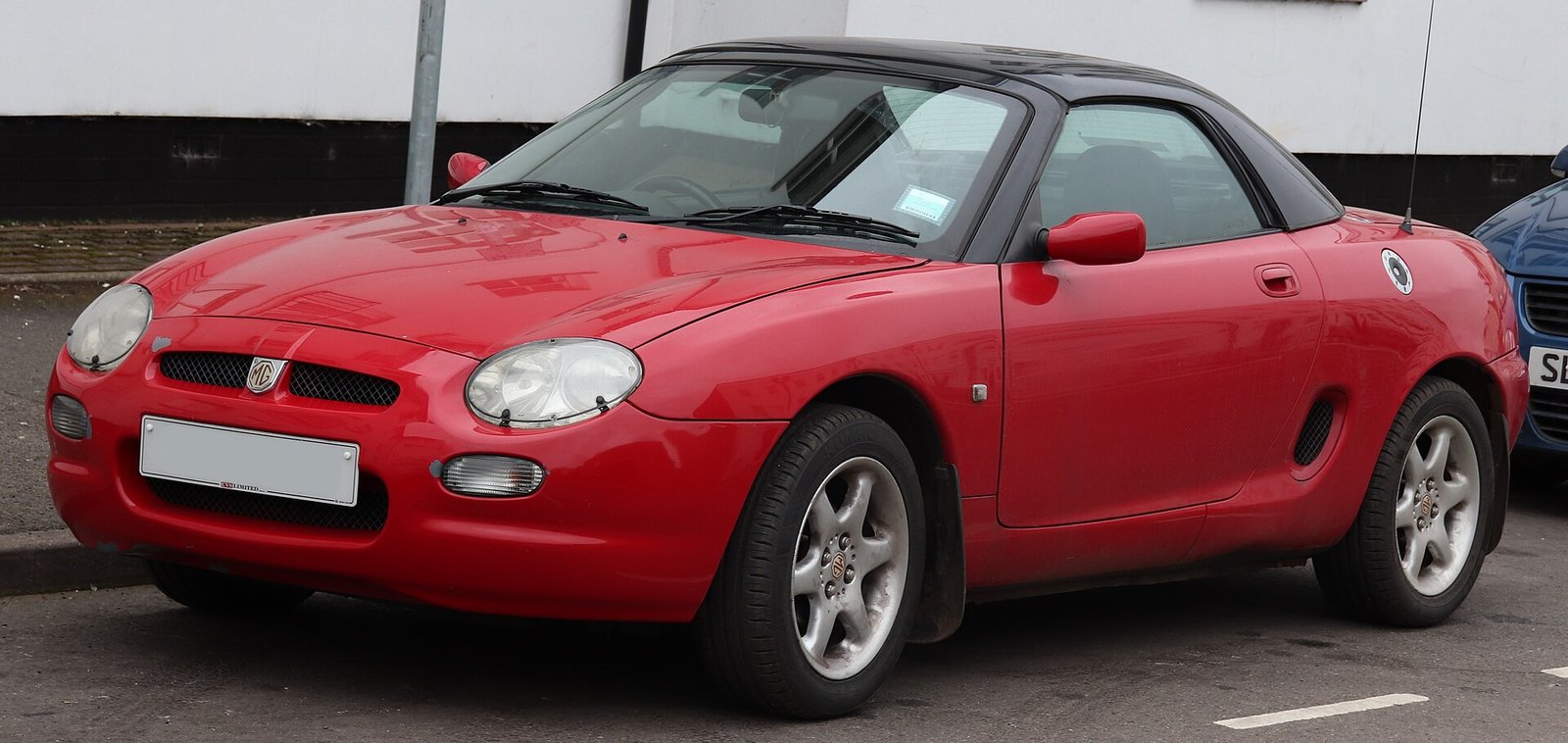
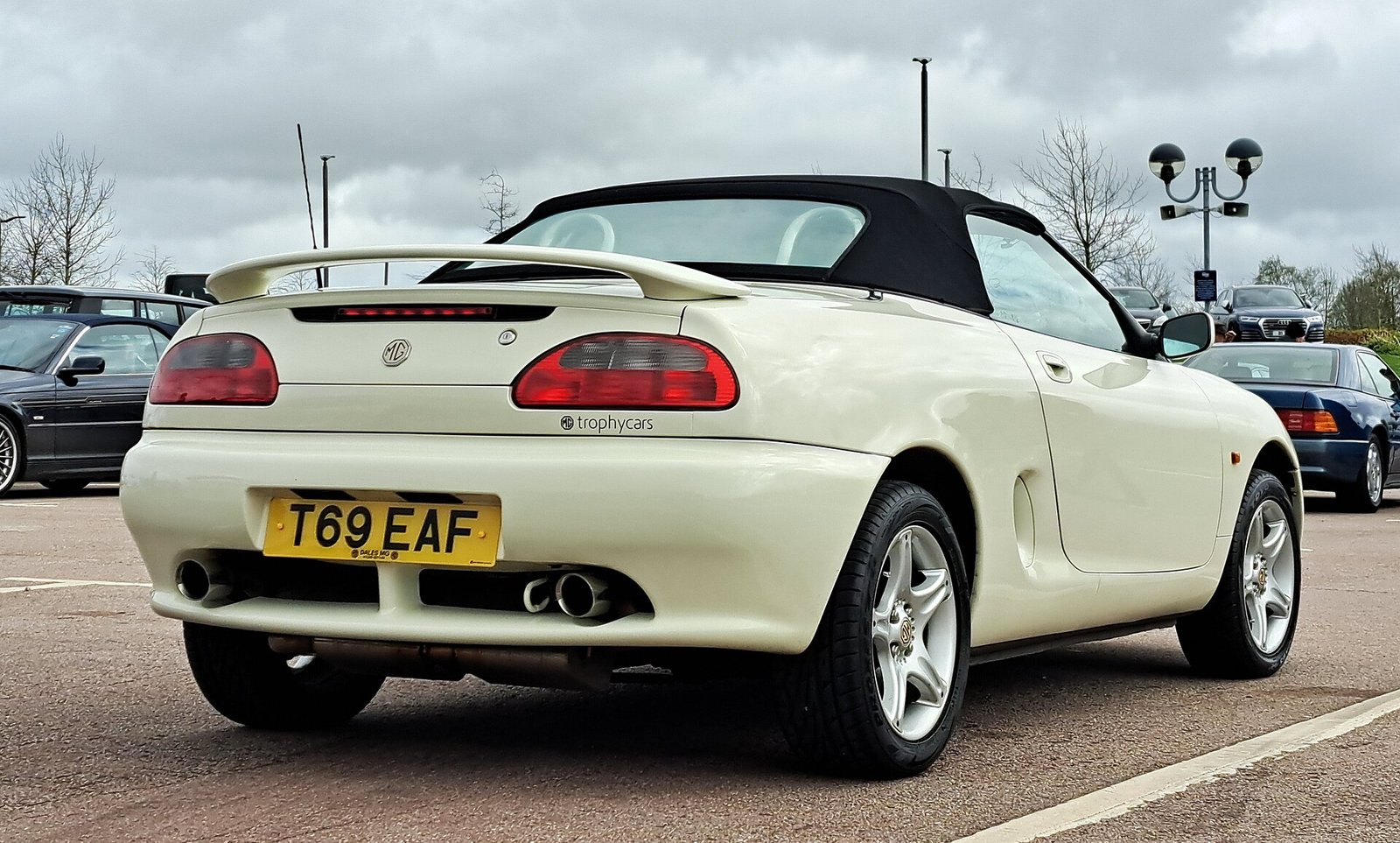
The MGF, launched at the 1995 Geneva Motor Show, was the first all-new MG sports car since the marque’s Abingdon factory closed in 1980 — and Rover did something genuinely brave with it. Rather than copy the front-engined Mazda MX-5, they put the 1.8-litre K-series engine amidships, behind the seats, and suspended the whole thing on Hydragas — Dr Alex Moulton’s interconnected gas-and-fluid spheres, of Metro fame. The result rode with a suppleness no rival could match and handled with the delicacy only a mid-engined layout gives you. It promptly became Britain’s best-selling sports car in the late nineties; 77,269 were built by 2002.
A facelift in late 1999 (usually called the Mk2) brought a better interior, revised electric power steering and — crucially for engine longevity, as we’ll get to — detail changes to the cylinder head’s location hardware. May 2001 added the entry-level 1.6i and the fabled MGF Trophy 160 flagship.
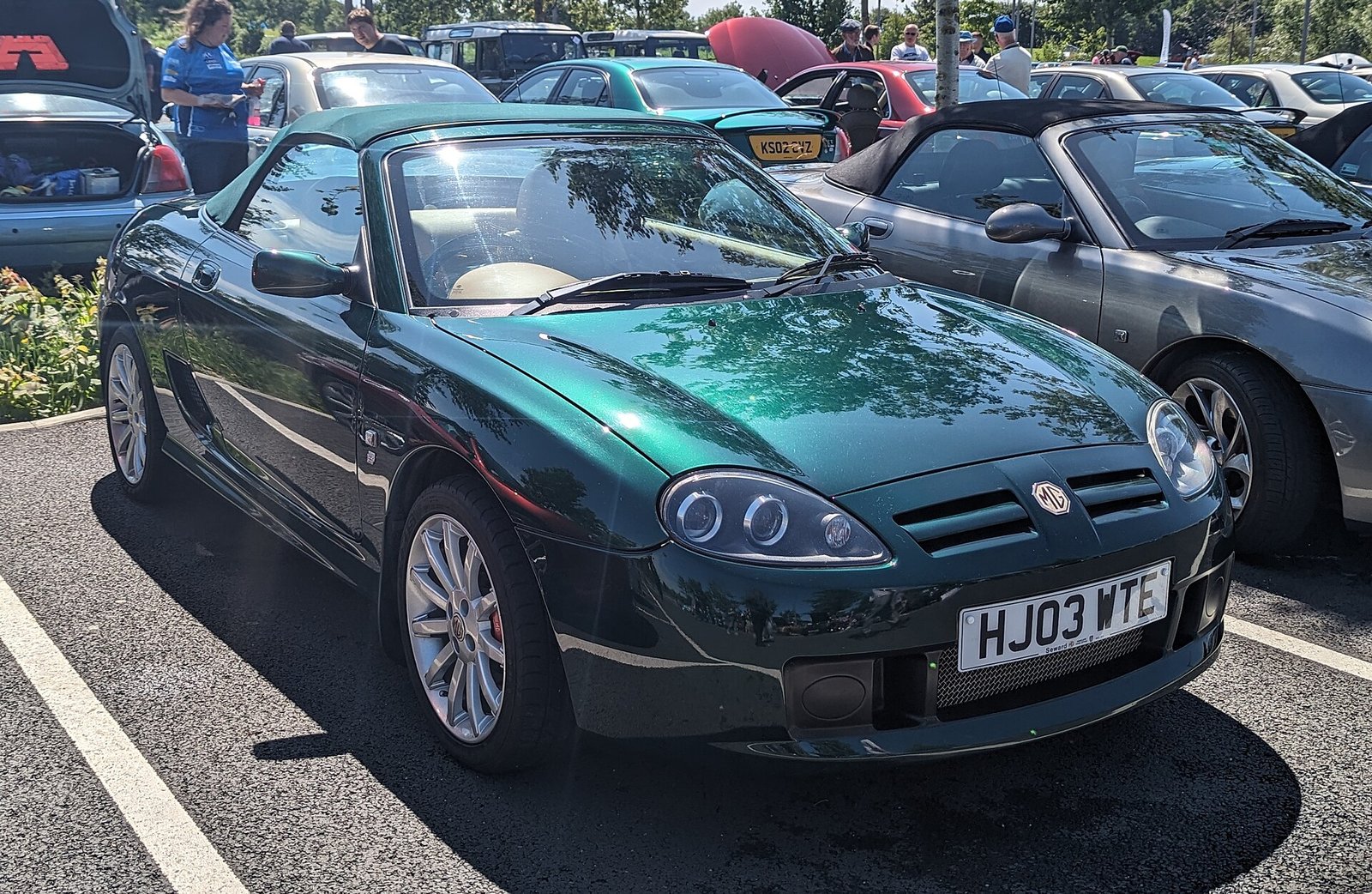
In February 2002, the by-then-struggling MG Rover gave the car a heavy revamp and a new name: MG TF (cheekily borrowed from the 1950s roadster). New front-end styling, a claimed 20% stiffer bodyshell, and — the big one — conventional coil springs in place of Hydragas. Sharper and more modern to drive, firmer-riding, and 39,249 found homes before the company collapsed in April 2005.
Then the strange afterlife: Nanjing Automobile bought the remains, restarted TF production under Chinese ownership (from 2007, with UK assembly at Longbridge from August 2008), and launched the TF LE500 — 500 numbered cars at £16,399 — followed by a cheaper TF 135 and an 85th Anniversary edition. Around 900 of these Longbridge-assembled cars were built before production wound down in 2010, with the last examples registered into 2011. A Chinese-era TF is a genuine curio: the rarest of the lot, and the newest mid-engined MG you can buy.
Engines and versions: which to buy
Every one of these cars uses a version of Rover’s all-alloy K-series — light, compact, eager, and rather more sophisticated than its reputation suggests. The line-up:
| Version | Years | Engine | Power | Worth knowing |
|---|---|---|---|---|
| MGF 1.8i | 1995–2002 | 1.8 K-series | 118bhp | The default choice; sweet and unstressed |
| MGF 1.8 VVC | 1995–2002 | 1.8 with variable valve control | 143bhp | Loves revs; two cambelts, so servicing costs more |
| MGF 1.6i | 2001–2002 | 1.6 K-series | 111bhp | Budget model built to fight the MX-5 on price |
| MGF Trophy 160 | 2001–2002 | Tuned VVC | 158bhp | AP Racing four-pot front brakes, lowered stiffer suspension, 0–60mph in 6.9sec |
| MGF/TF Stepspeed 120 | 2000–2005 | 1.8 with CVT auto | 118bhp | Clever but fragile if neglected — specialist knowledge essential |
| MG TF 115 | 2002–2005 | 1.6 | 114bhp | Cheapest way into a TF |
| MG TF 135 | 2002–2005 | 1.8 | 134bhp | Best all-rounder of the TFs |
| MG TF 160 | 2002–2005 | Tuned VVC | 158bhp | The quick one; sports seats and firmer set-up |
| MG TF LE500 / 135 / 85th | 2008–2011 | 1.8 (135bhp) | 135bhp | Chinese-era revival, c.900 UK-assembled cars; rare and improving in spec |
The honest recommendation, and it’s ours rather than gospel: don’t get hung up on the badge on the bootlid. A cherished 1.8i with a folder of receipts will be a better car than a neglected Trophy 160 every day of the week. That said, the MGF VVC is the connoisseur’s pick — its variable valve timing gives a lovely snarling top end — and the Trophy 160 and MG TF 160, with 158bhp in a car weighing around a tonne, are the ones already showing collector behaviour at the top of the market.
The head gasket, honestly
Right. The elephant in the engine bay. Yes, K-series head gasket failure was real, common, and is the single biggest reason these cars got cheap. It’s also, in 2026, close to a solved problem — provided you buy a car that’s had the proper fix.
The causes are well understood now. The K-series is a low-friction alloy engine sealed by long through-bolts, and the original elastomer-beaded gasket had very little tolerance for abuse. Early 1.8s located the head on plastic dowels, which soften with heat and allow the head to shuffle about on the block — Rover switched to steel-reinforced location around 2000. The mid-engined MGF made things worse with long coolant pipes to a front radiator and a small coolant capacity: lose a litre or two through a perished pipe or a tired radiator and the engine overheats before the gauge has finished waking up, cooking the gasket’s sealing beads. Coolant loss the car could shrug off in a Rover 25 became terminal in an MGF.
The modern cure is equally well established, and it’s the single most important line in any MGF or MG TF advert. The recognised fix is a multi-layer steel (MLS) head gasket — the design used on the later Chinese-built engines, which simply don’t suffer the old failures — fitted together with uprated head bolts and the revised, stiffer oil rail that supports the bottom of the through-bolts, plus a skim of the head if it’s warped and steel dowels where applicable. Specialists sell this as a complete kit and any MG garage knows the drill. Belt-and-braces owners add a low-coolant alarm, because the factory never fitted a proper one and early warning is everything on this engine.
Hydragas vs coils: the real MGF vs MG TF question
Choosing between MGF and MG TF is really choosing a suspension philosophy. The MGF’s Hydragas spheres — nitrogen above, fluid below, interconnected front to rear — give it a ride quality that still embarrasses modern sports cars, with fluid, long-legged damping over broken British tarmac. The TF’s coil springs make it feel tauter, more precise and more conventional; contemporary road testers preferred it, and on a smooth B-road it’s the sharper tool. On the roads most of us actually use, plenty of owners quietly prefer the MGF.
The catch: Hydragas units haven’t been manufactured since around the turn of the millennium, and the nitrogen slowly seeps through the rubber diaphragms over the years. A tired system shows up as a car sitting low (or lopsided), a harsh choppy ride, and ever-more-frequent trips to be “pumped up” — a ten-minute job for anyone with the right pump, including MG specialists and many club members. The good news is the support network has risen to the challenge: specialists re-gas and recondition exchange spheres, good used units exist, and complete coil-spring conversion kits are available for cars whose spheres are past saving. Budget for it, don’t fear it — but do bounce each corner on inspection and walk away from a car sitting on its haunches unless the price reflects it.
What to look for: the buying checklist
- Head gasket history. As above. Invoice for an MLS conversion = the best £0 you’ll ever spend reading paperwork. No history? Check for mayonnaise under the coolant cap, verify the coolant level, and watch the temperature gauge like a hawk on the test drive.
- Subframes and their mounts. Both cars carry front and rear subframes, and they rot — the front one worst, because it never gets any engine heat to dry it out, and the mounting brackets and prescribed MOT areas around them are common failure points. Sills corrode too, particularly the hollow rear sections and around the subframe mounts, and rot from the inside out when the drain holes block. Repairs are all doable (patch welding is fine, stainless replacement brackets exist for TFs) but labour adds up fast if the subframe has to come out — this is the fault most likely to turn a £2,000 car into scrap.
- Suspension. On an MGF: ride height, corner bounce test, evidence of recent pump-ups or re-gassed spheres. On both: bushes and balljoints can be worn out in as little as 25,000 miles, and the hollow front wishbones themselves rust.
- Cambelt. Every 60,000 miles or four to five years, whichever’s first. The VVC has a second belt and costs more to do; a specialist job typically runs £500-plus with the water pump and tensioners. No evidence of a recent change? Budget for one immediately.
- Hood and leaks. Check the fabric around seams and folds, and the plastic rear screen on MGFs — they go brittle and crack, especially if the hood’s been folded carelessly in the cold. Replacement hoods are £500–£600 fitted. Lift the carpets: door seals and rear light clusters let water in, and damp footwells accelerate everything bad.
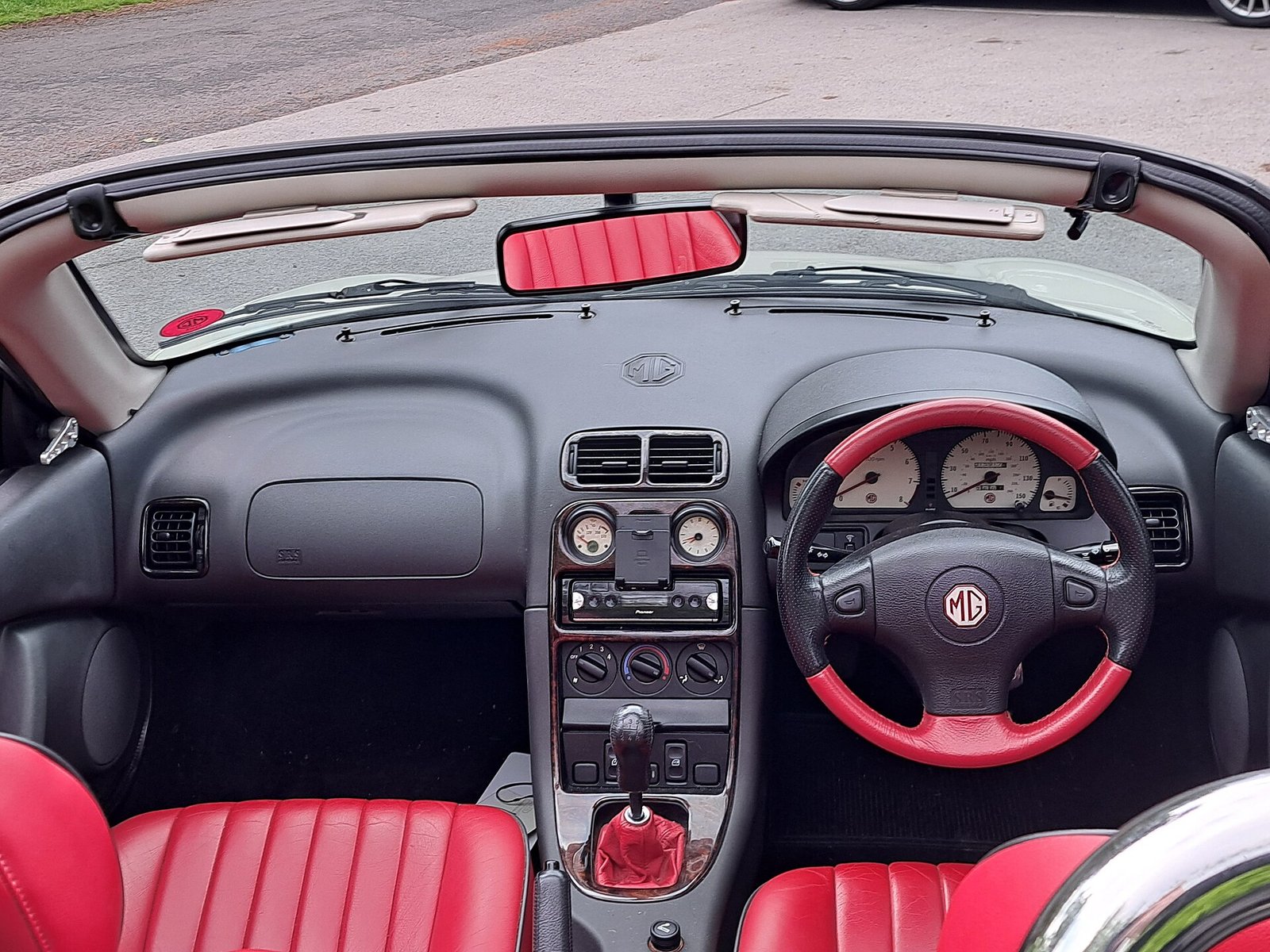
- Interior and electrics. Sagging driver’s seat bolster, brittle instrument binnacle mounts, lazy wiper motors, dim MGF headlamps. All fixable, all useful haggling material.
- Stepspeed autos. Only buy on specialist advice with full history. A good one is a pleasant thing; a bad one costs more than the car.
Running costs and the club scene
Here’s where the MGF plays its trump card. Mechanically it’s mostly Rover parts-bin, so consumables are cheap and availability is excellent — Rimmer Bros, the MGOC spares operation, X-Part and a healthy web of independent MG specialists cover almost everything. Insurance on a classic policy is peanuts. Fuel economy in the high 30s is realistic driven gently. The mid-engined layout makes some jobs (that VVC cambelt, anything at the back of the engine) more labour-intensive than on an MGB, which is worth remembering when comparing specialist quotes.
And the club support is genuinely first-rate. The MG Car Club — the marque’s oldest club, based at Kimber House in Abingdon — runs a dedicated MGF Register for F and TF owners, with events, an excellent free online buyers’ guide and deep technical knowledge, while the MG Owners’ Club adds insurance schemes and its own spares arm. Between those two, the independent MGF Register forums and the usual owner communities, there is no fault on these cars that somebody hasn’t already photographed, fixed and written up. For a first-time classic owner, that safety net is worth real money.
What MGFs and TFs are actually worth in 2026
Now the part the sneering classes haven’t noticed: these are still astonishingly cheap, but the floor is quietly firming up. Based on live UK asking prices we can see on Car & Classic, eBay and the listings tracked here on Old Bangers at the time of writing (July 2026):
| Condition / model | Typical asking price (July 2026) |
|---|---|
| Projects and high-milers (MOT’d but tired) | Under £1,000 — we’ve seen runners advertised at £490–£850 |
| Usable MGF or TF, sensible mileage | £1,500–£3,500 |
| Good, history-rich cars | £4,000–£6,000 |
| Best low-mileage examples, Trophy 160, TF 160 | £6,000–£10,000, with sub-10,000-mile cars at the top of that |
| Chinese-era TF LE500 | Around £5,000–£7,000 where they surface at all |
Those figures line up with the MG Car Club MGF Register’s own guidance of roughly £1,500–£4,000 for usable cars and £4,000–£8,000 for quality ones. The pattern within the numbers matters more than the numbers: ordinary cars remain temptingly cheap, while the standouts — Trophy 160s, TF 160s, genuinely low-mileage anything — have detached from the pack and keep edging up as tatty cars get scrapped. That’s exactly how MGB and Midget values behaved a generation ago. One thing an MGF won’t do for decades yet is go tax-free: even the earliest 1995 cars don’t reach the DVLA’s rolling 40-year historic vehicle exemption until the mid-2030s, so budget for normal VED and MOTs — our guide to the 40-year rule explains how that works.
Live MGF and MG TF market data
Old Bangers tracks live listings and recorded sold prices for enthusiast cars across UK marketplaces and auctions. Right now there are over 200 MG listings on the site, including MGFs and MG TFs — see what’s for sale and what things are actually making on the MG market page, or search every live listing.
The alternatives
The obvious rival is the Mazda MX-5 NB (1998–2005): front-engined, utterly dependable, brilliant to drive — and priced accordingly, because everyone already knows it (rust in the sills is its own war story; see what NBs are making on our Mazda market page). The left-field alternative is Toyota’s MR2 Mk3 Roadster (1999–2006), the only other affordable mid-engined drop-top, which counters bulletproof mechanicals with a boot that barely holds a toothbrush. The MGF splits the difference: more interesting than the Mazda, more practical and far better supported by clubs than the Toyota, cheaper than both — and the only one that’s British.
Frequently asked questions
Are MGF head gasket problems fixed?
The design weaknesses were never recalled away, but the aftermarket solved them years ago: a multi-layer steel gasket fitted with uprated head bolts and the revised oil rail is regarded as a permanent fix, and the same MLS design on later Chinese-built K-series derivatives has no reputation for failure. Buy a car with documented MLS conversion, keep the cooling system healthy, and the head gasket stops being a reason to avoid these cars.
MGF vs MG TF — which is better?
The TF (2002–2005) is stiffer, sharper and coil-sprung; the MGF (1995–2002) rides far better on its Hydragas suspension and feels more supple on real roads. TFs are newer and avoid Hydragas ageing; MGFs counter with that ride and, in Trophy 160 form, the strongest collector appeal. There’s no wrong answer — buy the best-maintained car you can find of either.
How much is an MGF worth in 2026?
As of July 2026, UK asking prices we can observe run from well under £1,000 for tired-but-running cars, through £1,500–£3,500 for usable examples, to £4,000–£6,000 for good ones. The best low-mileage cars, Trophy 160s and TF 160s are advertised anywhere from £6,000 to around £10,000.
Are MGFs going up in value?
Slowly, and from the top down. Ordinary cars are still cheap, but attrition is thinning the herd, and the standout examples — Trophy 160, TF 160, low-mileage originals and the rare Longbridge-built LE500 — are clearly commanding more than they did a few years ago. Our opinion: the trajectory looks like the early stages of what happened to MGB values, which is precisely why now is the time to buy the best you can afford.
Is an MGF a good first classic car?
One of the best. It’s cheap to buy, cheap to insure and run, mechanically well understood, supported by two big clubs and a deep specialist network, and modern enough to use daily in summer. The two famous weaknesses — head gasket and Hydragas — both have established fixes and are easy to check for before you buy. Just inspect the subframes properly first.
Verdict
The MGF has spent twenty years as the punchline to a joke told mostly by people who never drove one. Meanwhile, the people who did drive one got a mid-engined British roadster with sweet steering, a willing twin-cam and a magic-carpet ride for the price of a package holiday. The head gasket is fixable, permanently. The Hydragas is manageable, indefinitely. The rust is checkable, in twenty minutes with a torch. Find a loved one with the paperwork to prove it, and Britain’s cheapest mid-engined sports car might just be Britain’s biggest bargain, full stop.
Fancy one yet?
See every MGF, MG TF and the rest of the MG market for sale right now — live listings with real sold prices alongside.
Free checklist: The Classic Car Buyer’s Inspection Checklist
Print it and take it to the viewing — rust hotspots, MOT-history red flags, paperwork and the 8 walk-away signs. Enter your email and we’ll send you the PDF.